Free Shipping Within USA | 1-year Warranty
Tracked Dumper Undercarriage Wear During Heavy Material Transport
Tracked Dumper Undercarriage Wear During Heavy Material Transport
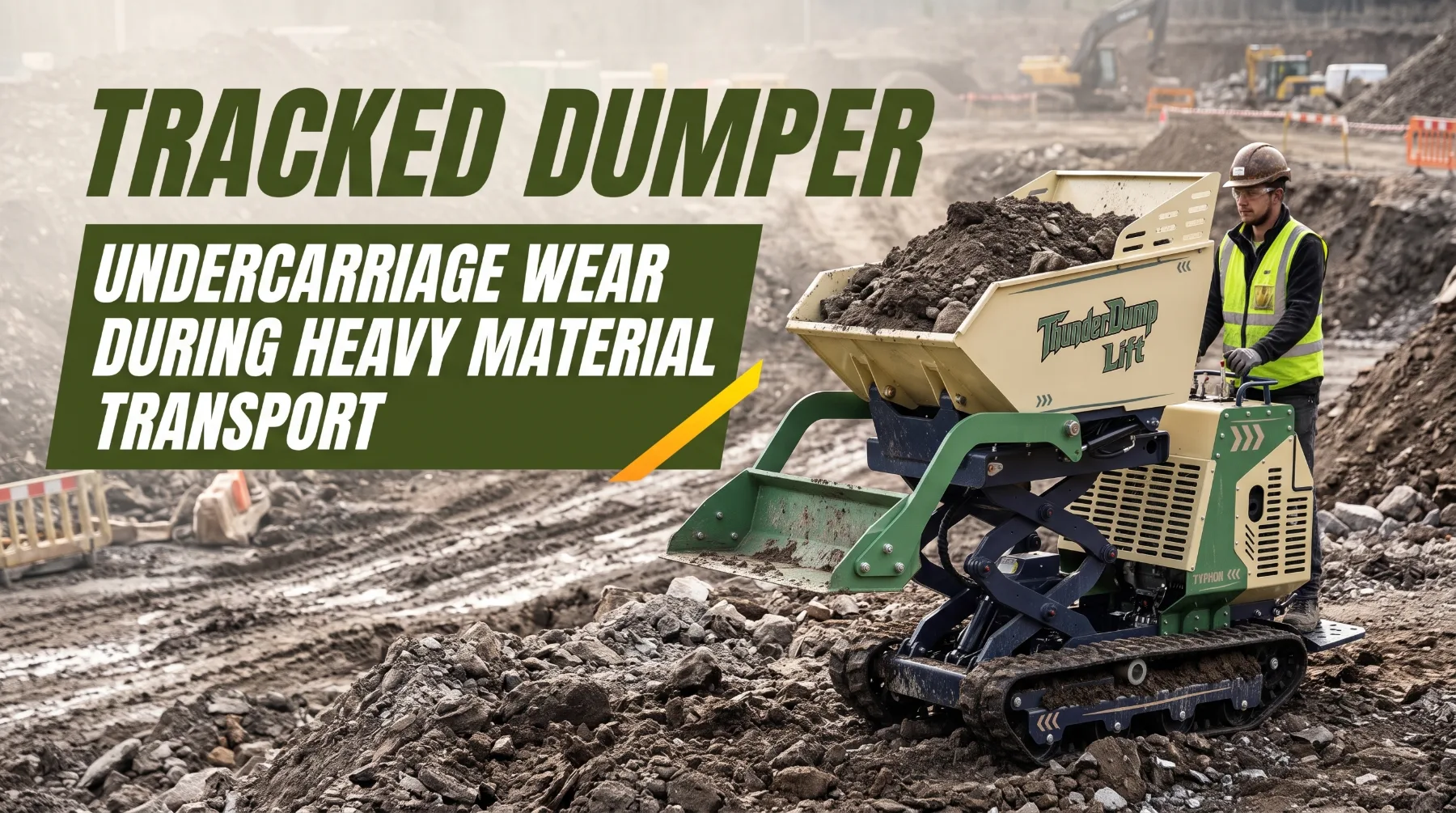
Tracked dumpers keep material moving on jobsites where wheeled vehicles struggle. They carry excavated soil away from foundations, deliver aggregate to drainage trenches, haul broken concrete and mixed debris off demolition sites, and cross mud, soft ground, and uneven terrain that would stop a wheeled dumper in its tracks. Their low ground pressure and strong traction make them a dependable choice for heavy transport in difficult conditions.
The undercarriage makes that capability possible, and it carries the heaviest burden. Every load travels on the tracks, sprockets, rollers, and idlers. Each pass across rocky ground, each sharp turn, and each trip over debris adds stress. A full bed concentrates weight on the running gear. Abrasive soil grinds against moving parts. Repeated turning drags the tracks sideways across the ground. Over time, these forces wear components down and change how the machine travels.
Undercarriage wear is unavoidable, but much of it can be controlled. Worn components that go unnoticed often damage the parts around them, turning a single replacement into a larger repair. A track that is too loose can derail. A seized roller can cut into a track. A worn sprocket can accelerate wear on a new track. Each of these problems costs time, money, and production, and some create safety hazards for the operator and nearby workers.
Track Tension and Adjustment
Track tension affects how the undercarriage engages with the ground, the drive sprocket, and the idlers. Correct tension allows the track to wrap smoothly around these components, transfer drive force efficiently, and stay securely on the rollers. Incorrect tension in either direction accelerates wear and creates operating problems.
Check and adjust tension according to the manufacturer’s procedure and specified measurement. Most procedures measure track sag at a defined point, often midway between the idler and the nearest roller or between the top rollers, with the machine in a specific position. Some manufacturers require the machine to be moved a short distance before measuring so slack settles in a consistent location. Follow these steps exactly, since a measurement taken in the wrong place or position will not reflect the true tension.
Tension changes with conditions. Mud, clay, and debris packed into the undercarriage effectively tighten the track as they build up. Tracks may also stretch slightly with use, and temperature changes can affect rubber tracks. Check tension regularly, more often when working in sticky or packed material, and adjust only when the machine is clean enough to give an accurate reading.
Key takeaway: Keep track tension within the manufacturer’s specified range using the approved measurement method, avoid both overtightening and slack tracks, and treat grease tensioning systems as high-pressure components.
Sprocket and Roller Wear
Sprockets, rollers, idlers, and track links or lugs experience repeated contact during every minute of travel. These components work as a system, and wear on one part quickly affects the others.
Rubber tracks deserve close attention as well. Look for cuts, cracks, missing or worn lugs, damaged guide lugs, and exposed internal cords or steel cores. Exposed cords indicate that the track structure has been compromised and the track may be nearing failure.
Wear parts age together. Installing a new track on worn sprockets can shorten the life of the new track, because the worn teeth no longer match the track’s pitch and engagement. Likewise, a seized roller can cut into a new track within a short period of operation. Replace worn components as recommended by the manufacturer, and assess the condition of the surrounding parts when replacing any one of them. Use approved replacement parts and follow the specified installation and torque procedures.
Key takeaway: Inspect sprockets, rollers, idlers, and tracks for uneven wear, damaged teeth, flat spots, leaks, and loose hardware, and replace worn components as recommended before damage spreads across the undercarriage.
Ground Conditions and Abrasion
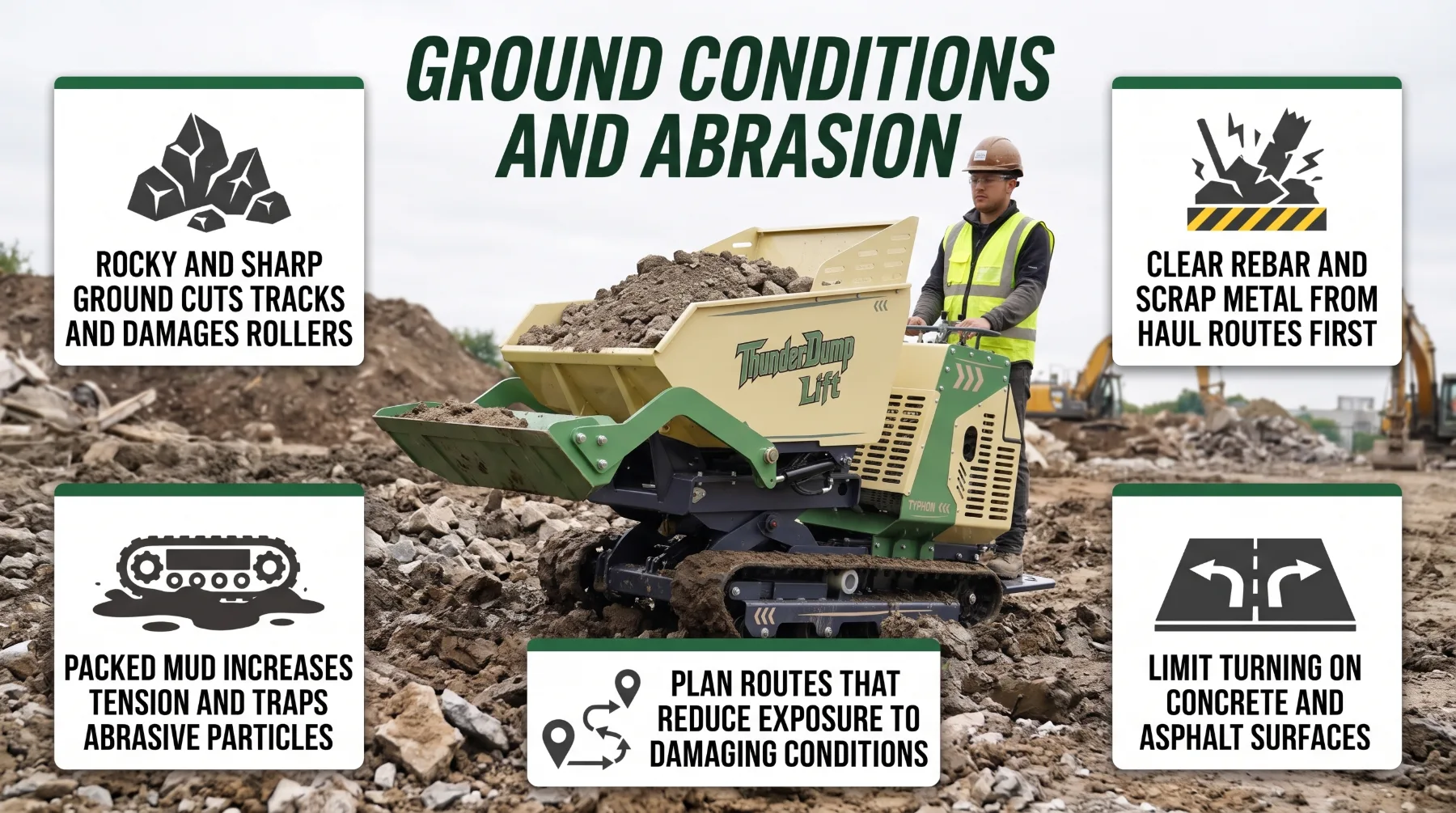
The ground a tracked dumper travels on has a direct effect on how quickly the undercarriage wears. The same machine can show very different wear rates on soft topsoil, sandy ground, rocky haul roads, and demolition sites.
Different conditions create different types of wear:
- Rocky ground: Sharp or angular rock can cut rubber tracks, chip lugs, and impact rollers and guards. Rocks can also wedge between the track and the undercarriage frame.
- Abrasive sand: Fine, hard particles act like grinding compounds on seals, rollers, sprockets, and track surfaces, accelerating wear even at moderate speeds.
- Mud and clay: Sticky material packs into the undercarriage, increases track tension, adds weight, and can freeze solid in cold weather.
- Construction debris: Rebar, wire, broken concrete, scrap metal, and timber with nails can cut, puncture, or tear tracks and wrap around rollers.
- Hard surfaces: Concrete and asphalt increase abrasion on rubber tracks, particularly during turns.
Buildup is a particular concern. Material packed around sprockets, rollers, and idlers prevents components from turning freely, increases tension beyond its specified range, and holds abrasive particles against seals. In freezing conditions, packed mud can harden overnight and lock rollers in place, causing flat spots or track damage when the machine first moves.
Never attempt to clear material from the undercarriage while the engine is running or while the tracks can move. Tracks, sprockets, and rollers create pinch points that can cause severe injuries in an instant.
Tracks spread the machine’s weight over a larger area, but they do not make every surface safe or harmless to the undercarriage. Choose routes that protect both the machine and the ground.
Key takeaway: Rocky ground, abrasive sand, mud, and construction debris accelerate undercarriage wear, so plan routes that avoid cutting hazards, remove buildup during scheduled cleaning with the machine isolated, and never clear the undercarriage while tracks can move.
Turning and Load Distribution
How a tracked dumper turns and how its load is placed both have a major influence on undercarriage life. These are areas where operator technique makes a measurable difference.
Tracked machines steer by driving the tracks at different speeds or in opposite directions. During a turn, part of each track drags sideways across the ground rather than rolling forward. That sideways drag increases wear on track surfaces, lugs, guide lugs, sprockets, and idlers. The sharper the turn, the greater the drag.
Counter-rotation and pivot turns are useful in confined spaces, but frequent use, especially on hard or abrasive surfaces, can shorten track life considerably. Use gradual turns whenever space allows. Where a tight change of direction is needed, a multi-point turn often produces less wear than a single counter-rotation.
Turning also affects track retention. Sharp turns on slopes, across curbs, against obstacles, or in ruts can push a track off its rollers or idler, particularly if tension is low. Avoid turning while crossing obstacles or traveling on side slopes, and straighten the machine before climbing over curbs or ridges.
Load distribution matters just as much. Keep loads within the rated payload and distribute material evenly in the bed. An overloaded or unevenly loaded dumper concentrates weight on specific rollers, idlers, and sections of track, accelerating wear and increasing the risk of instability.
Uneven loading affects stability as well as wear. A load biased toward one side raises the risk of tipping on slopes and during turns, and it can make the machine harder to steer. Never exceed the manufacturer’s limits to reduce the number of trips.
Key takeaway: Use gradual turns wherever space allows, limit pivot and counter-rotation turns on hard surfaces, avoid turning on slopes or obstacles, and keep loads evenly distributed and within the rated payload.
Transport Speed and Operating Time
Speed and time on the tracks both add to undercarriage wear. Every hour of travel moves the tracks, sprockets, and rollers through thousands of cycles, and the speed of that travel affects how much stress each cycle carries.
Traveling at high speed over rough ground increases impact loads on the undercarriage. When a track strikes a rock, rut, or debris at speed, the force transfers through the track, rollers, idlers, and frame. Repeated impacts can crack components, loosen hardware, damage seals, and cut rubber tracks. Higher speeds also increase heat and friction in moving parts.
Reduce travel over sharp debris wherever practical. If a route cannot avoid cutting hazards, travel slowly and straight across them rather than turning on top of them.
Slopes require additional caution. Avoid using the dumper on slopes beyond its permitted operating limits. Operating on steep grades increases loads on the downhill track and components, raises the risk of derailing during turns, and creates serious stability hazards. Consider the machine’s lift capacity and load position when planning material handling, and follow the manufacturer’s instructions for travel direction, lifting operations, and permitted gradient.
Monitoring operating hours alongside site conditions helps maintenance teams anticipate component replacement and schedule service before failures occur.
Key takeaway: Choose a travel speed suited to the terrain and load, slow down over rough ground and debris, stay within permitted slope limits, and plan efficient routes to reduce unnecessary travel hours.
Daily Undercarriage Inspection
A consistent daily inspection is the most effective way to control undercarriage wear. Most undercarriage problems develop gradually, and a few minutes of inspection before each shift can catch them before they lead to costly repairs, unplanned downtime, or unsafe operation.
Inspection continues once the machine is moving. During operation, watch and listen for warning signs:
- Unusual noise: Squealing, grinding, clicking, or knocking can indicate worn sprockets, failing rollers, or a tensioning problem.
- Vibration: New or increased vibration may point to damaged components or debris in the undercarriage.
- Change in travel behavior: Pulling to one side, slipping, jerking, or reduced travel speed can signal track, sprocket, or travel motor problems.
- Track movement: A track that appears to wander, slap, or ride up on the idler may be loose or misaligned.
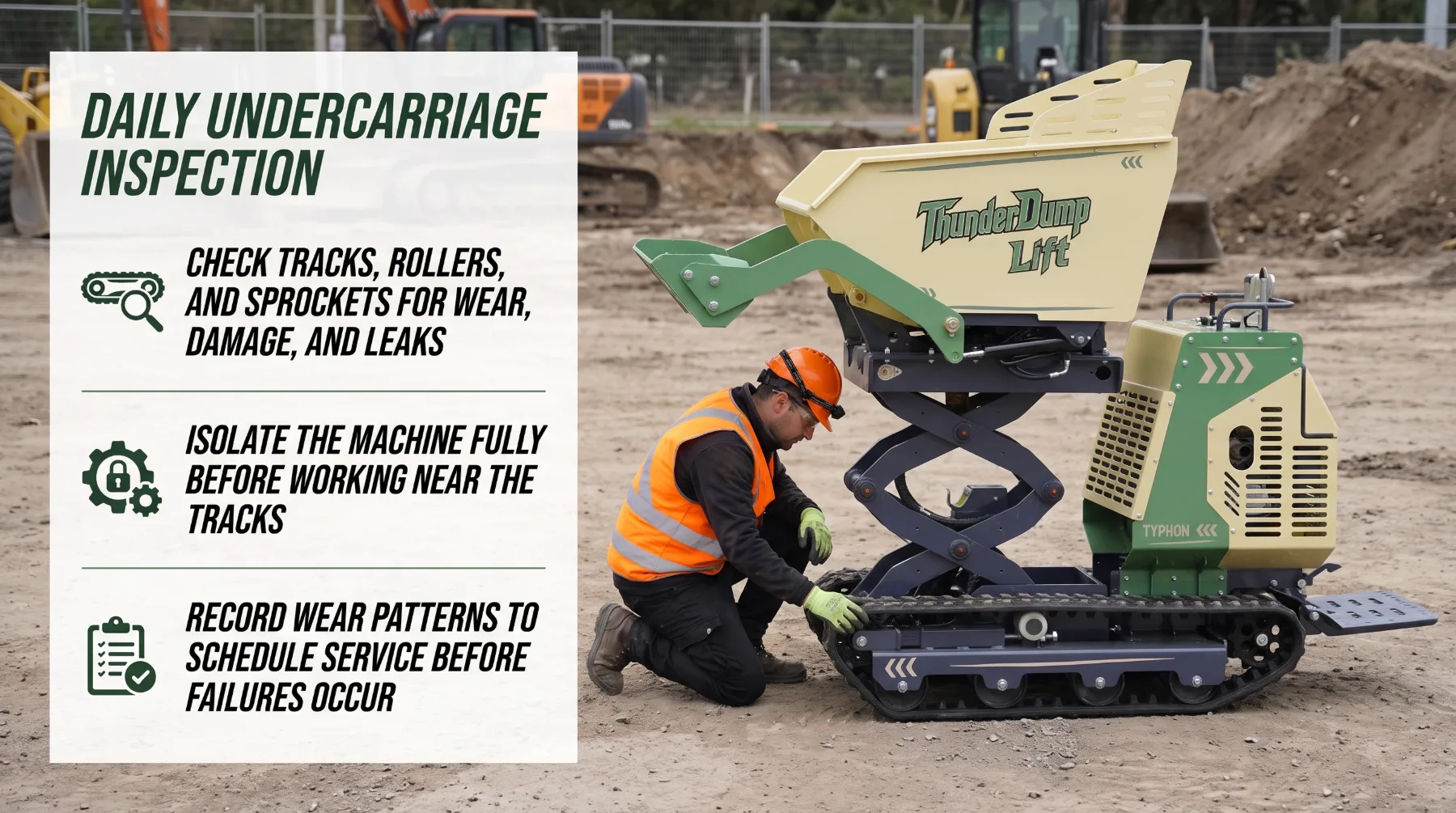
If any of these signs appear, stop the machine in a safe location, shut it down, and inspect before continuing. Report any defect that affects safe movement, and keep the machine out of service until it has been corrected.
Records turn daily inspections into useful information. Record repeated wear patterns, tension adjustments, component replacements, and the site conditions the machine has worked in. Over time, these records reveal which components wear fastest, how site conditions affect undercarriage life, and when replacement parts should be ordered. Arrange service before damage compromises safe movement rather than waiting for a failure in the field.
Key takeaway: Inspect tracks, tension, rollers, sprockets, idlers, guards, and fasteners before every shift with the machine isolated, watch for unusual noise, vibration, or travel changes during operation, and record wear patterns to schedule service before failures occur.
Conclusion
Tracked dumper undercarriage life depends on load management, terrain, turning habits, and maintenance. Keeping track tension within the manufacturer’s specified range prevents both the accelerated wear of an overtightened track and the derailing risk of a loose one. Regular inspection of sprockets, rollers, and idlers catches worn or seized components before they damage the tracks and surrounding parts. Planning routes that avoid sharp debris and abrasive surfaces, and removing buildup safely during scheduled cleaning, limits wear from ground conditions. Gradual turns and evenly distributed loads within the rated payload reduce sideways drag and concentrated stress. Suitable travel speeds and efficient routes lower impact loads and unnecessary operating hours. A thorough daily inspection ties these practices together, giving operators and maintenance teams the information they need to act early. When you apply these practices consistently, routine checks and controlled travel help reduce avoidable wear, extend undercarriage life, and keep your tracked dumpers moving heavy material safely and reliably on every job.
FAQs
What causes tracked dumper undercarriage wear?
Abrasive ground, excessive track tension, heavy loads, sharp turns, and poor maintenance can all contribute. Rocky surfaces and construction debris can cut tracks and damage rollers, while sand and packed mud grind against seals and moving parts. High travel speeds over rough ground, frequent counter-rotation turns, and uneven or overloaded beds add further stress. Consistent inspection and controlled operation help manage each of these factors.
Can a loose track derail?
Yes. A track with too much slack can come off the rollers or idler, especially during turns, on slopes, or when crossing obstacles. A loose track can also slap against the frame and allow the sprocket to skip. Keep tension within the manufacturer’s specified range, check it using the approved measurement method, and stop the machine immediately if a track appears to wander or ride up on the idler.
Should packed mud be removed?
Yes, when it is safe to do so and according to the cleaning procedure. Packed mud increases track tension, holds abrasive particles against seals, and can freeze solid in cold weather, locking rollers in place. Park on firm, level ground, lower the bed, shut down the engine, remove the key, and isolate the machine before working near moving components. Use tools rather than hands to remove buildup.
Does turning affect track wear?
Yes. Repeated sharp turns and pivoting can increase wear, particularly on firm or abrasive surfaces. During a turn, part of each track drags sideways across the ground, wearing the track surface, lugs, sprockets, and idlers. Use gradual turns wherever space allows, limit counter-rotation turns on hard surfaces, and avoid turning on slopes or while crossing obstacles.