Free Shipping Within USA | 1-year Warranty

Buying a Used Mini Excavator: A Practical Inspection Guide
Purchasing a compact excavator is a smart move for many contractors, landscapers, and property owners. These machines hold their utility incredibly well, handle a massive variety of tasks from trenching to demolition, and cost significantly less up-front when purchased pre-owned. However, shopping the used market can feel like walking through a minefield.
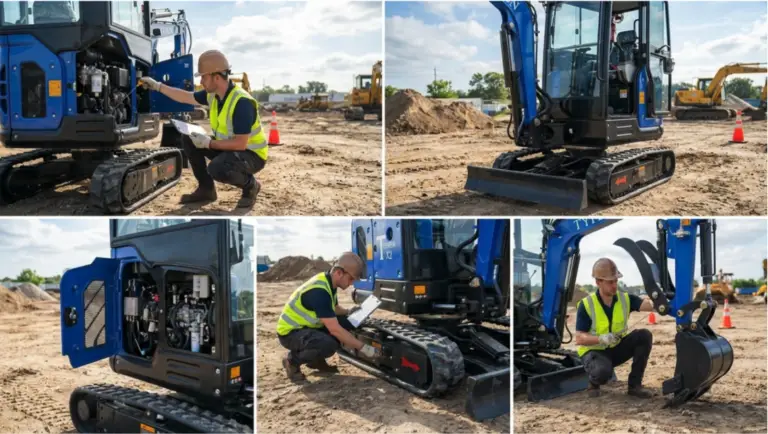
A clean coat of paint can easily hide worn-out bushings, failing hydraulic pumps, or structural cracks that will cost thousands of dollars to fix after you bring the machine home. When you are buying a used mini excavator, you cannot afford to take the seller’s word at face value. You need a systematic, hands-on approach to evaluate the machine’s true mechanical health.
This guide breaks down exactly how to inspect a pre-owned small excavator, what warning signs should make you walk away, and how to choose a machine that will reliably work on your jobsites instead of sitting in a repair shop.
Start with the Hours and Service History
The hour meter is the first thing most buyers look at, but it only tells part of the story. On a mini excavator, how those hours were spent matters far more than the raw number on the dash.
A machine with 1,500 hours that was used exclusively for heavy concrete demolition with a hydraulic breaker has suffered significantly more structural stress than a 3,000-hour machine used for light agricultural work or residential landscaping. Look closely at the overall wear on the body. If the hour meter reads low but the floor mats are worn through, the pedals are bare metal, and the joysticks are sloppy, the meter may have been replaced or disconnected.
Always ask the seller for maintenance logs. A private owner or contractor who can show you a clear history of regular engine oil changes, hydraulic fluid flushes, and daily greasing schedules is always preferable to a dealer selling an auction machine with a completely unknown background. If there are no records, you must assume the maintenance was neglected and inspect the machine with extra scrutiny.
Inspecting the Front Linkage and Pins
The boom, arm, and bucket linkage take the brunt of the abuse during daily operation. This is the first place you should check for excessive wear, slop, and structural damage.
Park the machine on flat ground and drop the bucket down so it firmly touches the dirt. Walk up to the front linkage and try to manually shake the bucket and the arm. If you can physically move the joints back and forth with your hands, the pins and bushings are badly worn. Next, start the machine, lift the boom slightly off the ground, and gently nudge the joystick to move the arm left and right. Watch the joints closely; if you see significant play or shifting before the bucket actually moves, the linkage needs to be rebuilt. Replacing pins and bushings isn’t impossible, but if the pin holes themselves have become oval-shaped from running the machine dry without grease, the boom components will require costly line-boring machine work to repair.
While checking the linkage, look closely at the welds along the boom and arm. Look for fresh paint that might be hiding patches, gussets, or hairline cracks. Pay special attention to the areas around the hydraulic cylinder mounts and the swing post where the boom attaches to the main frame of the excavator. Cracks in these high-stress areas indicate the machine was repeatedly overloaded.
Testing the Hydraulic System under Load
The hydraulic system is the heart of a digging machine. Engine repairs can be expensive, but a failing main hydraulic pump or leaking travel motors can easily write off a small excavator entirely.
Start by checking the hydraulic fluid itself. Pull the dipstick or look at the sight glass. The fluid should be relatively clear and amber-colored. If it looks dark, opaque, or smells burned, it has been overheated and neglected. If it looks milky, water has contaminated the system, which can ruin internal valves and pumps.
To test the hydraulic performance, you need to operate the machine until the fluid reaches normal operating temperature. Cold hydraulic fluid is thicker and can easily hide a weak pump or internal pressure leaks. Once the machine is warm, perform a few full cycles:
- Extend and retract the boom, arm, and bucket completely. The movement should be smooth and predictable, without jerking or shuddering.
- Check the cylinder rods for deep scratches, pitting, or rust. Wet sheen on the rods or puddles around the wiper seals indicate the hydraulic seals are blown and need replacement.
- Test the travel motors by driving the machine in a straight line forward and backward. If the excavator drifts heavily to one side, one of the track motors is underperforming or losing pressure.
- Try the “track lift” test. Use the boom and blade to lift one side of the machine completely off the ground, then spin that track using the travel lever. Repeat on the other side. The tracks should spin rapidly and smoothly without grinding noises.
Checking the Undercarriage and Tracks
Replacing the tracks and undercarriage components is a standard cost of owning an excavator, but you need to factor that cost into your buying price if the components are near the end of their lifespan.
Most mini excavators under 5 tons run on rubber tracks to prevent jobsite access damage on driveways and lawns. Inspect the tracks for deep cracks, chunks of missing rubber, and exposed internal steel cords. If the steel cords are visible, moisture will rust them out quickly, leading to a snapped track under load. Look at the drive sprockets at the rear of the undercarriage; the teeth should be blunt and flat on top. If the teeth look sharp, pointed, or hooked like a shark fin, the sprockets are completely worn out and will soon ruin a new set of tracks. Check the bottom rollers and idlers for heavy oil leaks around their caps, which means their internal bearings are failing.
Evaluating Engine Health and “Blow-By”
Open the engine canopy and look for signs of historical neglect. Look for thick coats of oil and dirt caked around the valve cover, oil filter, and fuel lines. Check the air filter; if it is completely choked with dust, it is a strong sign the daily maintenance checks were skipped.
When you start the engine from a dead cold, watch the exhaust. A brief puff of smoke is normal upon startup. However, continuous blue smoke means the engine is burning oil, white smoke typically indicates unburnt fuel or coolant leaking into the combustion chamber via a blown head gasket, and heavy black smoke means an air-fuel mixture issue or failing injectors.
To check for a worn-out engine with low compression, perform a simple check for “blow-by.” With the engine running at an idle, carefully remove the oil filler cap on top of the valve cover (wear gloves and safety glasses). Place your hand loosely over the open filler hole. If you feel a slight vacuum or gentle air movement, that is normal. But if the cap pops out of your hand, or you feel a rhythmic, high-pressure puff of exhaust gas accompanied by smoke shooting out of the oil fill hole, the piston rings are badly worn. This engine is losing compression and will likely require a complete rebuild or replacement in the near future.
House Rotation and the Slew Ring
The slew ring, or swing gear, allows the cab and upper structure of the excavator to rotate a full 360 degrees on top of the undercarriage. This is an expensive component to replace if it fails.
With the engine running, rotate the house slowly in both directions. Listen for any loud clicking, grinding, or popping sounds coming from directly beneath the seat. Stop the rotation periodically and check how much the upper house rocks or wobbles on the frame. To check this accurately, set the bucket on the ground and have someone watch the joint between the house and the undercarriage while you gently push down with the boom. If the upper house visibly lifts or shifts significantly away from the lower frame, the slew bearing is worn out.
Additionally, check the swing brake. When you release the joystick during a rotation, the house should stop turning cleanly. If it drifts significantly past the point where you let go of the control, the internal swing brake mechanism is slipping.
Matching the Machine to Your Real Workflow
Beyond the mechanical inspection, you must ensure the used machine is actually configurationally right for your everyday work.
If you frequently handle utility work on tight residential properties, look for models with zero tail swing so you can work safely alongside walls and fences without striking obstacles behind you. If your work requires driving through narrow walkways or garden gates, prioritize a sub-2-ton ultra-compact model with a retractable undercarriage.
Don’t forget about transportation logistics. Before finalizing a purchase, verify that your current truck and trailer setup can legally and safely haul the operating weight of the machine. A 4-ton excavator offers excellent digging depth, but if it forces you to upgrade your truck or acquire a commercial driver’s license, a smaller 2.5-ton model might be the more practical and cost-effective solution for your business operations.