Free Shipping Within USA | 1-year Warranty
Stone Crusher Maintenance for Reliable Rock Crusher Performance
Stone Crusher Maintenance for Reliable Rock Crusher Performance
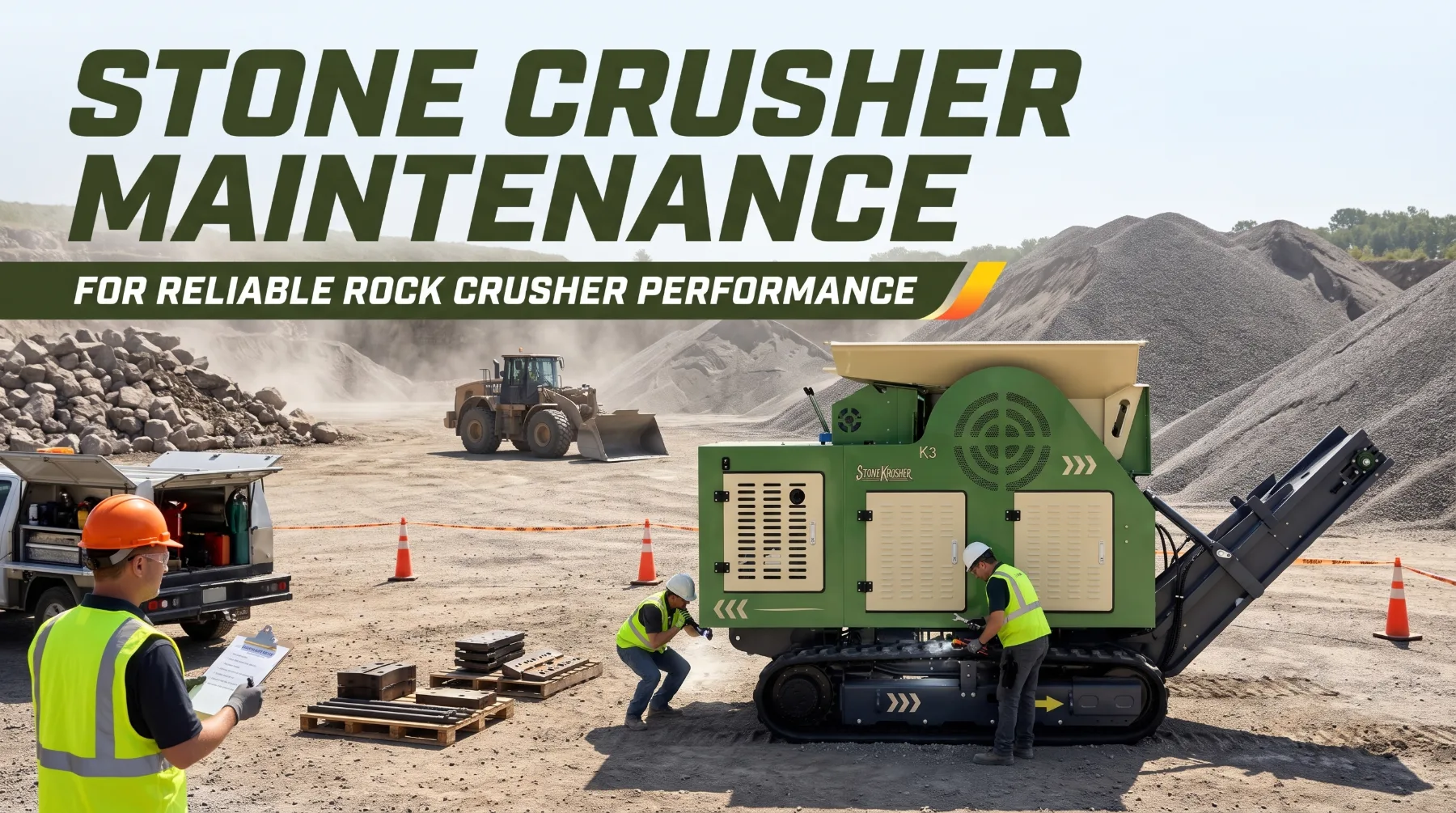
Stone crushers work under some of the harshest conditions on any jobsite, with abrasive rock, constant vibration, heavy impact, and dense dust stressing every major component. A consistent maintenance routine preserves crushing performance, keeps the finished product within specification, and catches wear before it turns into a costly breakdown. Service requirements vary by crusher type, drive system, and working environment, but the core principles apply to jaw, impact, and cone crushers alike. This guide covers inspection of the crushing chamber, drive components, bearings, lubrication, feed and discharge areas, and conveyors, along with how to plan maintenance around production so your crusher delivers predictable output shift after shift.
Inspecting the Crushing Chamber and Wear Surfaces
The crushing chamber takes the full force of every piece of rock that enters the machine. Depending on crusher design, the main wear surfaces may include jaw plates and cheek plates, blow bars and impact aprons, or mantles and concaves. These components are designed to wear, and how they wear tells you a great deal about the machine’s condition and the way it is being fed.
Inspect wear surfaces at the intervals set by the manufacturer, and more often when processing hard or highly abrasive material. Look for:
- Uneven wear patterns: Wear concentrated in one area often points to uneven feed distribution or material entering off-center.
- Cracks and breakage: Cracked plates or chipped blow bars can fail suddenly and damage surrounding parts.
- Loose fasteners and wedges: Movement between liners and the frame accelerates wear and can damage mounting surfaces.
- Changes in product size: A gradual increase in output size or a drop in throughput often signals that wear parts are reaching their limit.
Many wear parts can be rotated, flipped, or repositioned to extend service life. Some jaw plates can be turned end for end, and certain blow bars can be rotated to present a fresh edge. Follow the manufacturer’s guidance on when and how to do this, and always reset the discharge setting afterward, since worn or repositioned parts change the gap.
Replace wear parts when they reach the manufacturer’s wear limits rather than running them to failure. A worn-through liner can expose the crusher frame or rotor to direct impact, turning an affordable wear-part change into a major structural repair. Before entering or reaching into the crushing chamber, shut down the crusher, isolate all energy sources, and confirm that rotating parts have stopped completely.
Key takeaway: Inspect jaw plates, blow bars, liners, and fasteners regularly, use wear patterns and product size as early warning signs, and replace parts at the manufacturer’s wear limits to protect the crusher’s structure.
Checking Drive Belts, Couplings, and Power Transmission
The drive system transfers engine or motor power to the crushing mechanism. Depending on the crusher, it may include V-belts, sheaves, couplings, shafts, clutches, hydraulic drives, and tensioning devices. When any part of this system weakens, the crusher loses power at the chamber, runs less efficiently, and places added stress on bearings and shafts.
Belt-driven crushers need particular attention. Inspect belts for cracking, fraying, glazing, missing sections, and signs of oil contamination. Check tension using the manufacturer’s procedure and specification. Loose belts slip under load, generate heat, and wear quickly, while overtight belts increase load on shaft bearings. When one belt in a matched set fails, replace the full set where the manufacturer recommends it, since mixing new and worn belts causes uneven load sharing.
Sheave and coupling alignment matter just as much. Misalignment produces vibration, uneven belt wear, and premature bearing failure. Check sheaves for worn grooves and damage, and inspect couplings for cracked elements, loose fasteners, and excessive play. Unusual vibration, squealing, or a burning rubber smell during operation should prompt an inspection at the next safe opportunity.
Drive guards protect workers from some of the most serious hazards on a crushing site. Confirm guards are present, undamaged, and securely fastened before every start-up. Never remove a guard or work near drive components until the machine is shut down, isolated, and locked out according to the manufacturer’s procedure. Remember that large flywheels and rotors can continue turning for some time after power is removed, so wait until all motion has stopped completely.
Key takeaway: Keep belts correctly tensioned, sheaves and couplings aligned, and guards secure, and only work on drive components after full shutdown, lockout, and confirmation that all rotating parts have stopped.
Monitoring Bearings and Lubrication Points
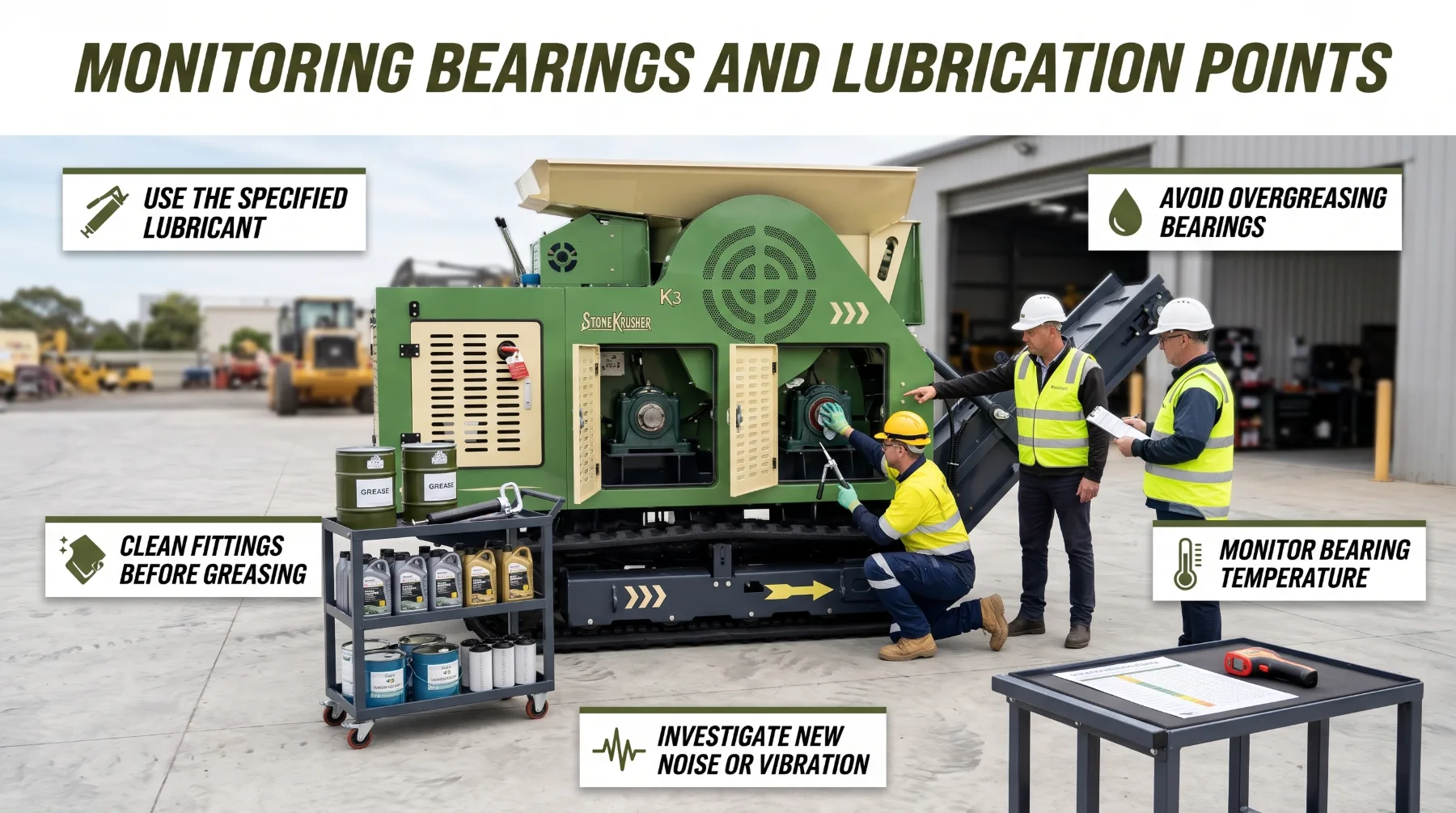
Bearings support the shafts, rotors, and eccentric assemblies that do the crushing work. They operate under heavy, repeated shock loads and in dusty conditions, which makes correct lubrication essential. Many crusher failures trace back to a bearing that ran short of lubricant, received contaminated grease, or overheated without anyone noticing.
Follow the manufacturer’s specifications for lubricant type, quantity, and service interval. Using the wrong grease or oil can reduce protection, and mixing incompatible lubricants can cause breakdown. More is not always better. Overgreasing can raise bearing temperature and damage seals, while undergreasing allows metal-to-metal contact. Clean grease fittings before connecting a grease gun so dust and grit don’t enter the bearing.
Crushers with circulating oil systems, such as many cone crushers, need additional checks:
- Oil level and condition: Look for darkening, milkiness that may indicate water, or metal particles.
- Filters: Replace on schedule and investigate if filters clog unusually fast.
- Oil temperature and pressure: Monitor readings against normal operating ranges.
- Coolers and breathers: Keep them clean so the system can shed heat and stay free of contamination.
During operation, watch for warning signs that a bearing is in trouble, including rising temperature, new or changing noise, increased vibration, and grease purging from seals. Where the crusher has temperature or vibration monitoring, review the readings regularly and record trends. Never apply lubricant or inspect moving components while the crusher is running unless the manufacturer specifically provides a safe, guarded procedure for that task.
Key takeaway: Use the specified lubricant, quantity, and interval, keep fittings and oil systems clean, and treat rising bearing temperature, noise, or vibration as a signal to investigate before failure occurs.
Keeping the Feed and Discharge Areas Clear
Material buildup around the feed opening, crushing chamber, and discharge area restricts flow and places extra stress on the machine. Fines can pack into corners, sticky material can cling to chutes, and oversized rock can bridge across the feed opening and stop production. Keeping these areas clear protects both throughput and equipment.
Good feed preparation prevents many problems before they start. Keep feed material within the crusher’s maximum permitted size, and remove contaminants such as steel, timber, and other uncrushable objects wherever practical. When recycling concrete, magnets and manual picking help remove rebar before it causes jams or damage. Feed the crusher at a steady, consistent rate, since surges can overload the chamber and starving the crusher can increase wear and reduce product quality.
Inspect accessible areas for lodged rock, packed dust, damaged chutes, and worn or missing guards. Clean buildup at the end of each shift and during the shift when conditions require it, always after a full shutdown and isolation.
Blockages demand strict safety discipline. Use the manufacturer’s approved blockage-clearing procedure and equipment, which may include a hydraulic hammer, chamber-clearing system, or other dedicated tools. Never use hands to dislodge rock, never stand on or in the crusher while it is running, and never position yourself where trapped material could shift, fall, or be ejected. Stored energy in a jammed chamber can release suddenly, so follow every step of the procedure even under schedule pressure.
Key takeaway: Control feed size and consistency, remove uncrushable material, clean buildup regularly, and clear blockages only with the approved procedure after full shutdown and isolation.
Inspecting the Conveyor and Material Discharge System
On crushers equipped with conveyors, the discharge system is just as important as the crushing chamber. If crushed material can’t move away efficiently, it backs up into the crusher, spills around the machine, and interrupts production.
Check the following components regularly:
- Belt tracking: A belt that runs off-center spills material and wears its edges quickly.
- Belt tension and condition: Look for tears, gouges, worn covers, and damaged splices.
- Rollers and idlers: Seized or damaged idlers cause belt wear and can generate heat.
- Scrapers and skirting: Worn scrapers allow carryback, while damaged skirting leads to spillage.
- Head and tail pulleys: Check lagging, bearings, and buildup on the pulley face.
- Discharge points: Confirm material lands where intended and stockpiles don’t climb into the conveyor.
Carryback and spillage are more than housekeeping problems. Material accumulating under the conveyor can build up around idlers and pulleys, accelerating wear and creating fire and trip hazards. Remove accumulated material from accessible areas only after the conveyor has been stopped and isolated, and never clean or adjust a moving belt.
Test emergency stops and pull-cord switches according to the manufacturer’s schedule, and confirm that all conveyor guards remain in place, especially at pinch points near pulleys. A well-maintained discharge system keeps finished material moving smoothly and reduces unplanned stops during production.
Key takeaway: Keep conveyor belts tracking straight, idlers and scrapers in good condition, guards and emergency stops functional, and clean spillage only after the conveyor is stopped and isolated.
Planning Maintenance Around Production Hours
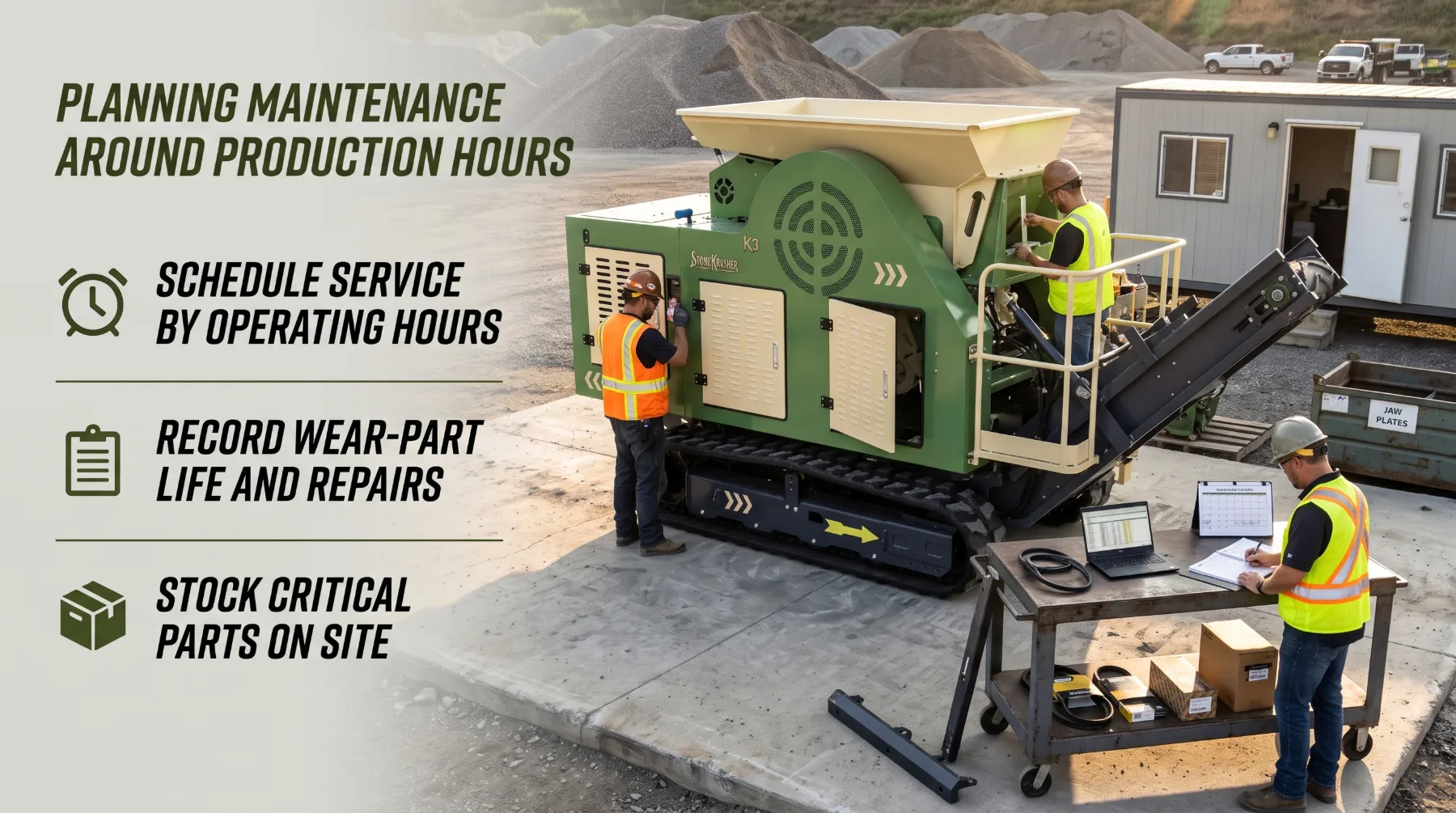
Effective crusher maintenance is planned, not reactive. Basing service on operating hours, material abrasiveness, and production volume lets you schedule work during planned downtime instead of losing a full production day to an unexpected failure.
Start with the manufacturer’s service schedule as your baseline, then adjust inspection frequency for your conditions. Highly abrasive granite or quartz-rich rock wears parts far faster than softer limestone or brick, so the same crusher may need very different wear-part intervals depending on the material. Build daily, weekly, and periodic checklists so operators and technicians know exactly what to inspect and when.
Over time, these records show how many hours or tons each wear part lasts in your application, which helps you predict replacements, control costs, and price future jobs more accurately. Keep commonly required parts, such as jaw plates, blow bars, belts, filters, and lubricants, available on site when practical, particularly for crushers working far from service facilities.
Finally, set a clear rule for safety-critical faults. Never continue production when a guard, emergency stop, structural component, or safety device is damaged or not working. Removing the crusher from service until repairs are complete protects your crew and prevents a small fault from escalating into a serious incident.
Key takeaway: Build maintenance schedules around operating hours, material abrasiveness, and manufacturer requirements, keep detailed records to predict wear, stock critical parts, and stop production whenever a safety-critical component is damaged.
Conclusion
Reliable stone crusher performance comes from consistent, disciplined maintenance across every major system. Regular inspection of jaw plates, blow bars, and liners protects the crusher’s structure and keeps product size on target, while properly tensioned belts and aligned drives deliver full power to the chamber. Correct lubrication and attention to bearing temperature, noise, and vibration prevent some of the most expensive failures, and clean feed and discharge areas keep material flowing. The feed size and output capacity should match the crusher’s design specifications to prevent overloading, maintain consistent material flow, and achieve the required production rate. A well-maintained conveyor moves finished product away efficiently, and planned maintenance supported by accurate records turns unexpected downtime into scheduled service. Before your next production run, review the manufacturer’s service schedule, inspect your wear parts and drive components, confirm guards and emergency stops are working, and start recording operating hours and wear-part life. That commitment to routine care is what keeps your crusher productive, safe, and dependable on every job.
Frequently Asked Questions
Which crusher components need regular inspection?
Inspect the crushing surfaces, such as jaw plates, blow bars, liners, mantles, and concaves, along with their fasteners and wedges. Check drive belts, sheaves, couplings, and guards, and monitor bearings and lubrication points for proper grease or oil supply. Inspect feed hoppers, chutes, and discharge areas for buildup and damage, and check conveyor belts, idlers, scrapers, and emergency stops. Structural connections and welds should also be examined for cracks. Follow the manufacturer’s inspection schedule and increase frequency in abrasive conditions.
Why should crusher wear parts be replaced on time?
Worn parts reduce crushing efficiency, lower throughput, and allow product size to drift out of specification. Running wear parts past their limits also exposes the crusher frame, rotor, or other major components to direct impact and abrasion, which can turn a routine part change into a major structural repair. Excessive wear can increase vibration and stress on bearings and drive components as well. Replacing parts at the manufacturer’s wear limits protects the machine and keeps output predictable.
What can unusual crusher vibration indicate?
Unusual vibration can point to several problems, including loose fasteners, worn or failing bearings, drive misalignment, damaged or unevenly worn belts, unbalanced rotors or worn blow bars, or uneven feed distribution. It may also indicate cracked mounting points or structural issues. Don’t ignore a change in vibration. Stop the crusher at the next safe opportunity, isolate it, and inspect the likely causes. Where vibration monitoring is fitted, review recorded trends to identify developing problems early.
Should operators clear a crusher blockage while it is running?
No. A running or jammed crusher can release stored energy suddenly, causing rock to shift, fall, or eject without warning. Operators should follow the manufacturer’s shutdown, isolation, and blockage-clearing procedure every time, using only approved tools and equipment. Never use hands to free trapped material, never stand on or in the crusher while it is operating, and keep everyone clear of areas where material could move. Confirm all rotating parts have stopped before beginning work.