Free Shipping Within USA | 1-year Warranty

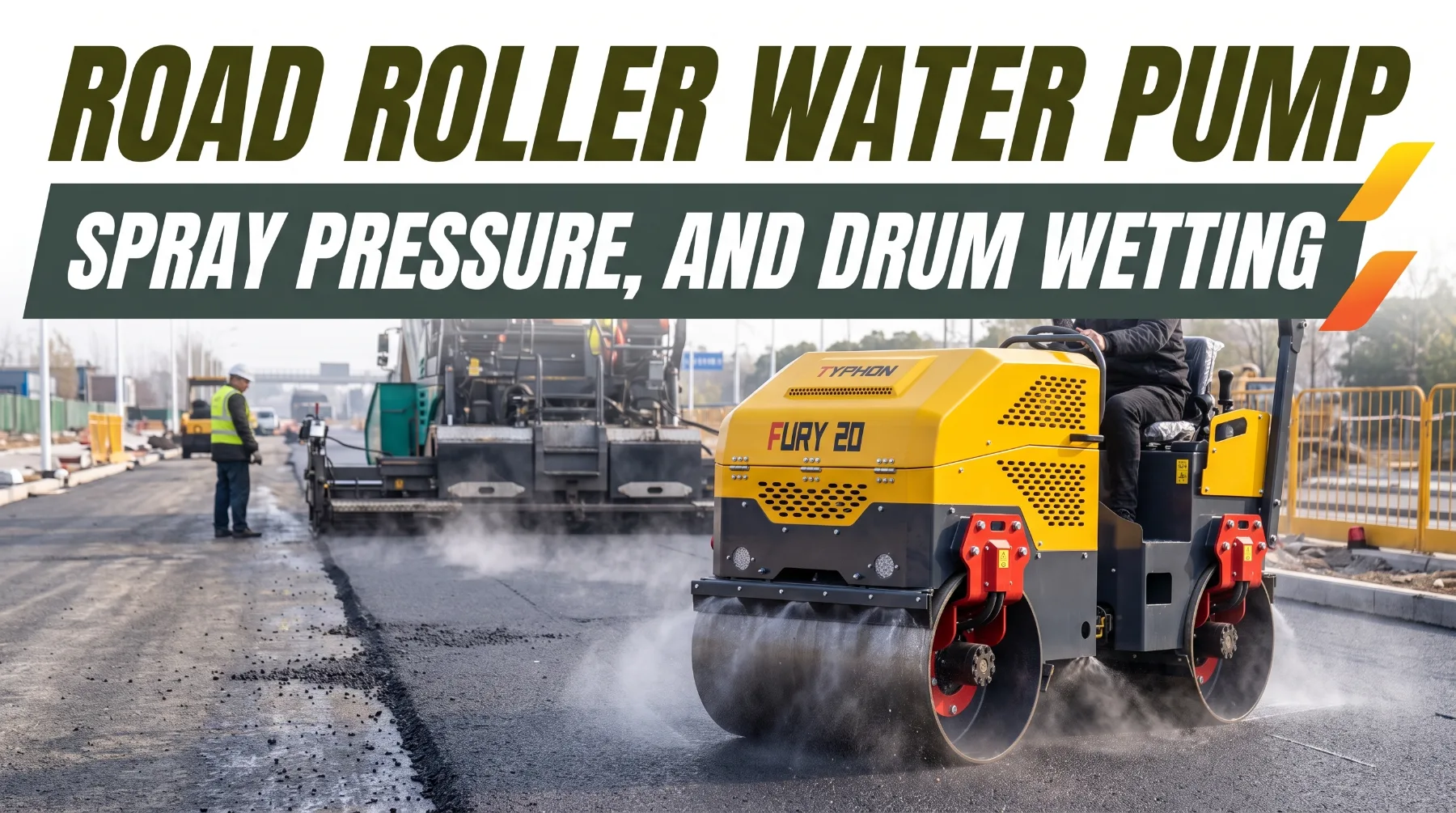
Road Roller Water Pump, Spray Pressure, and Drum Wetting
Road Roller Water Pump, Spray Pressure, and Drum Wetting
During asphalt compaction, a road roller moves steadily across the hot mat, pressing the material into a smooth and dense surface with each pass. Behind that consistent movement is a water system that can be easy to overlook until a problem appears. A water pump sends flow to spray nozzles that apply a thin, even film across the drum, helping prevent hot asphalt from sticking to the steel surface and pulling material from the mat. When the pump, spray pressure, and nozzles work properly together, the drum stays clean and the finished surface remains consistent.
Water delivery depends on several components working at the right rate and pressure. The pump supplies the flow, while the nozzles distribute it across the drum surface. Blocked nozzles, weak pump performance, or uneven spray coverage can leave dry areas where asphalt begins to build up. Regular checks help keep the system delivering enough water throughout the compaction cycle.
Keeping the drum-wetting system in good condition supports both finish quality and machine uptime. Operators can monitor spray coverage during operation and check the pump, lines, filters, and nozzles as part of routine maintenance. Consistent water delivery helps prevent buildup and keeps the drum ready for repeated passes across the asphalt.
How the Water Pump Supplies the System
The water pump is the heart of drum wetting. It draws water from the tank and moves it through the spray lines to the nozzles positioned around the drum. Everything downstream depends on the pump doing this reliably, because the nozzles can only distribute the water the pump actually delivers to them.
For the system to work as designed, the pump’s output has to provide sufficient water delivery throughout operation, not just at the start of a pass. Several factors influence whether that supply stays consistent. Pump condition, the water level in the tank, the state of the filters, and the integrity of the connections all play a part. A worn pump, a low tank, a clogged filter, or a loose fitting can each interrupt steady flow, so keeping all of them in good order is what keeps water moving to the drum.
Key takeaway: The water pump moves water from the tank to the drum nozzles, and its output, along with pump condition, water level, filters, and connections, determines whether supply stays consistent during operation.
Spray Pressure and Nozzle Output
Once water reaches the spray lines, pressure decides how it comes out of the nozzles. Spray pressure influences the distribution pattern each nozzle produces, and sufficient pressure is what allows the system to lay consistent coverage across the full width of the drum. Too little pressure, and the spray pattern breaks down, leaving the drum unevenly wetted.
The trouble often shows up at the nozzles and lines themselves. A blocked nozzle stops spraying entirely, and a restricted line reduces the flow reaching everything downstream, both of which create dry areas on the drum. Those dry spots are exactly where asphalt starts to stick. Regular inspection is the reliable safeguard here. Checking that each nozzle sprays cleanly and that the lines run clear helps maintain even spray patterns through continuous compaction, so the whole drum stays covered as it should be.
Key takeaway: Spray pressure controls how water distributes through the nozzles, and blocked nozzles or restricted lines create dry areas, so regular inspection keeps spray patterns even.
Why Drum Wetting Matters
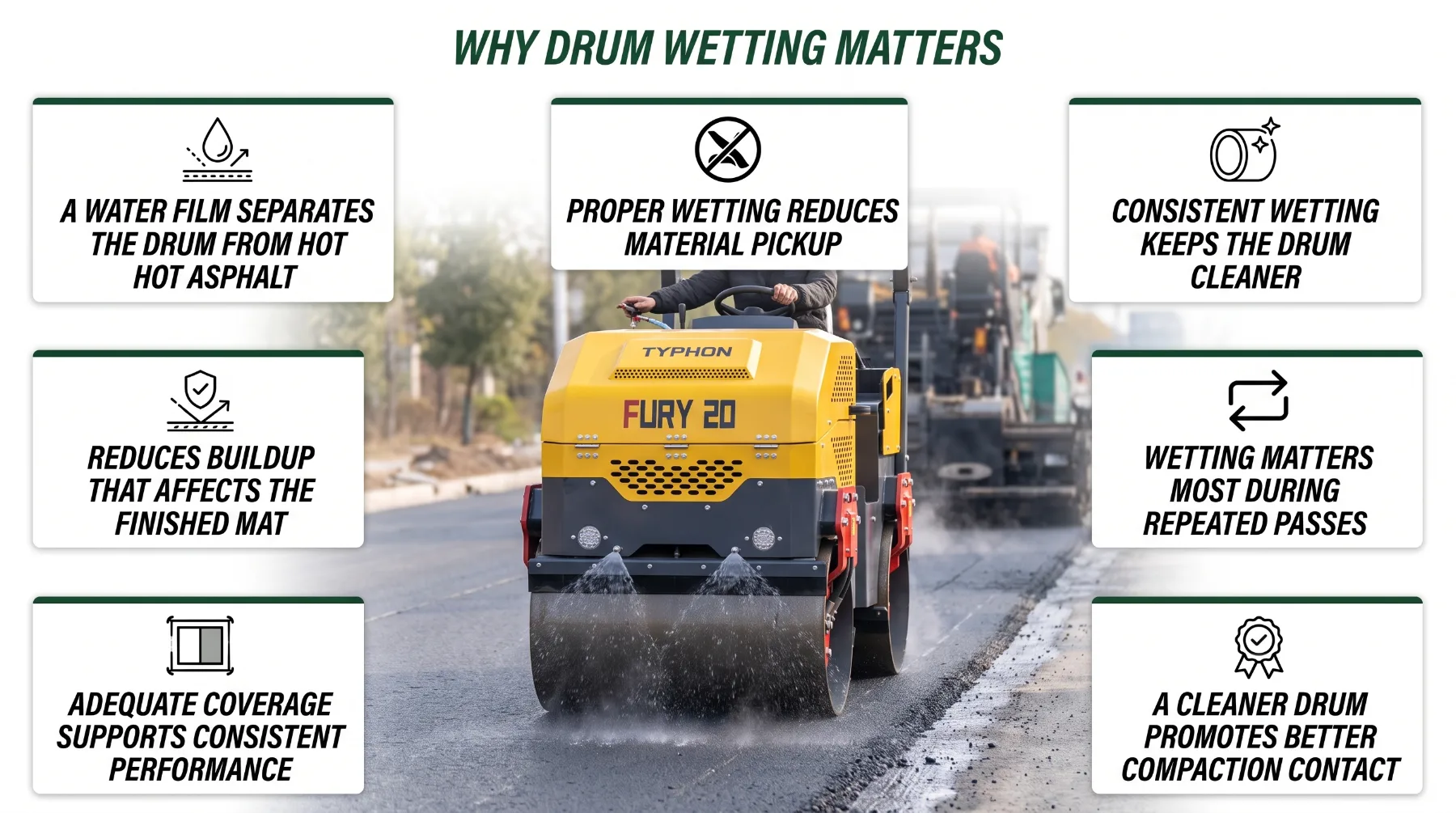
Hot asphalt can stick to a dry, heated drum, especially during continuous compaction. A controlled water film creates a layer between the drum and the asphalt, helping reduce material pickup and keeping the drum surface cleaner. This supports smoother drum contact and helps protect the quality of the finished mat.
The importance of consistent wetting becomes greater when the roller makes repeated passes over fresh asphalt. If the water film is interrupted, material can begin building up on the drum, which may affect surface consistency and compaction quality. Maintaining proper water coverage throughout the operation helps keep the drum working cleanly from pass to pass.
- Water Film: Creates a separating layer between the hot asphalt and drum surface.
- Reduced Material Pickup: Helps prevent fresh asphalt from sticking to the drum.
- Drum Cleanliness: Keeps the drum surface cleaner during repeated compaction passes.
- Surface Protection: Reduces the risk of asphalt buildup affecting the finished mat.
- Continuous Compaction: Consistent wetting becomes especially important during repeated passes.
- Water Coverage: Maintaining adequate coverage helps support consistent drum performance.
- Compaction Quality: A cleaner drum promotes more consistent contact with the asphalt surface.
Key takeaway: A controlled water film keeps hot asphalt from sticking to the drum, which matters most during continuous compaction when the drum repeatedly contacts hot material.
Water Distribution Across the Drum
Even coverage across the full working width is the goal, because unevenness causes problems in both directions. A dry section allows asphalt to build up right where the film thins out, while an excessively wet section simply uses more water than needed, draining the tank faster without improving results. The aim is a consistent film edge to edge, not too little and not too much.
Getting there depends on both nozzle placement and clean flow. Spray nozzles should be positioned to provide appropriate coverage across the working width, so no part of the drum is left short. Just as important, filters and spray lines need to stay clean, since debris or buildup in the system restricts flow to some nozzles and skews the distribution. When the nozzles are well placed and the lines run clear, water spreads evenly and the whole drum surface stays properly wetted.
Key takeaway: Even coverage avoids dry sections that cause buildup and overly wet sections that waste water, so position nozzles across the working width and keep filters and lines clean.
Pump and Spray System Maintenance
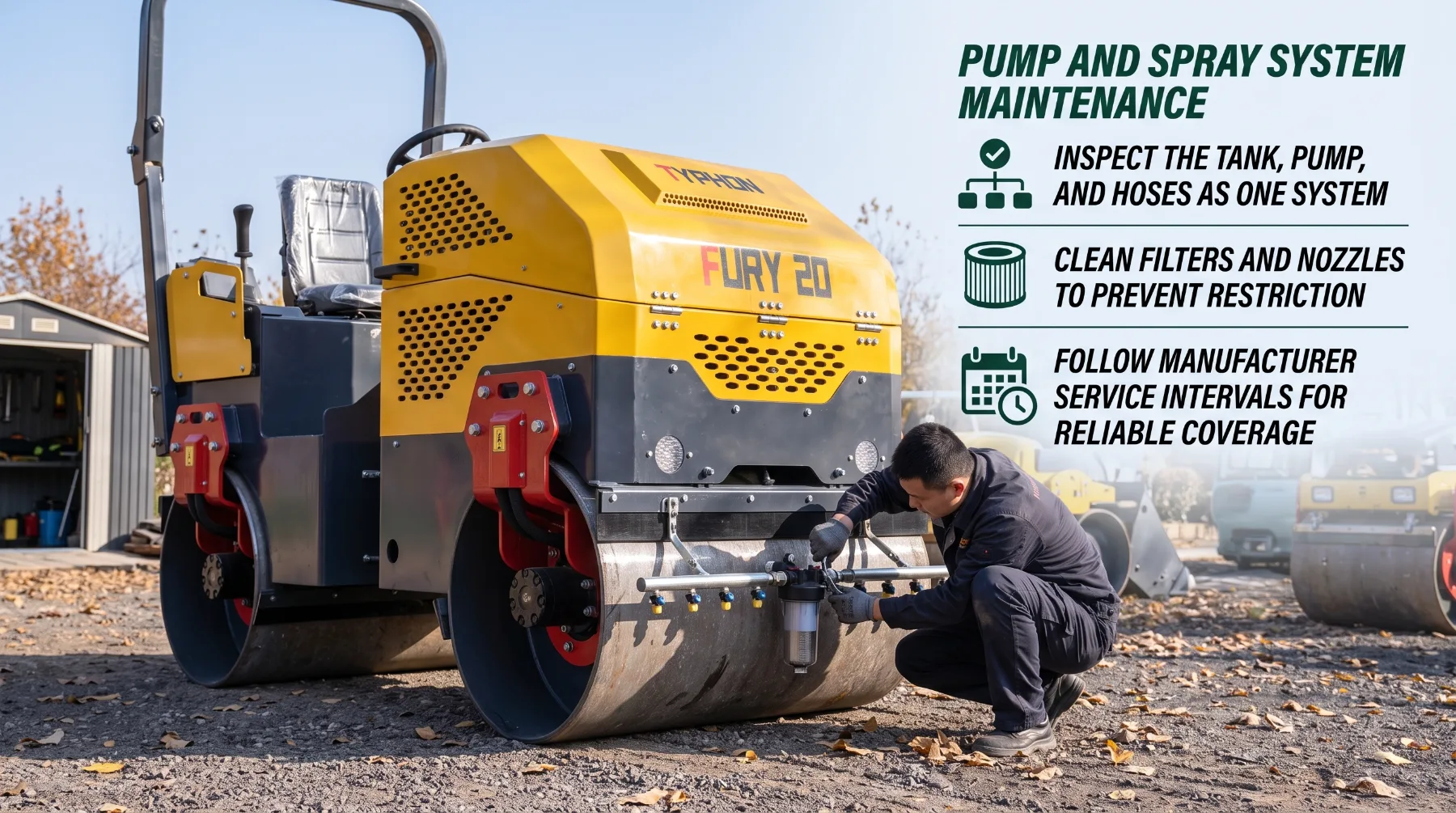
A drum-wetting system stays dependable only when it’s maintained as a whole. The water tank, pump, hoses, filters, valves, and nozzles should all be inspected as part of routine maintenance, because a fault in any one of them affects the water reaching the drum. Treating the system as a connected set, rather than reacting only when spraying fails, is what keeps it working consistently.
The most common enemy of the system is restriction. Debris and mineral buildup can accumulate in filters, lines, and nozzles, gradually choking water flow and degrading spray performance until dry spots appear. Regular cleaning and inspection catch this before it disrupts a job. Following the manufacturer’s service requirements for the tank, pump, and spray components gives you a reliable schedule to work from, keeping the system delivering even coverage over the long run.
Key takeaway: Inspect the tank, pump, hoses, filters, valves, and nozzles as routine maintenance, since debris and mineral buildup restrict flow, and follow the manufacturer’s service requirements to keep the system consistent.
Adjusting Water Use to Conditions
The right amount of water isn’t fixed, because conditions change how quickly it’s needed. Ambient temperature, asphalt temperature, roller speed, paving conditions, and evaporation all affect how much water the drum requires to stay properly wetted. A setting that works well on one job can be wrong for the next, so water use is something to manage actively rather than set once and forget.
Weather makes the point clearly. Hot conditions cause water to evaporate from the drum faster, calling for more frequent or heavier application to maintain the film, while cooler conditions may need less. Roller speed and asphalt temperature shift the demand as well. The dependable approach is to read the actual conditions in front of you and adjust water use accordingly, guided by the manufacturer’s recommendations. Matching application to conditions keeps the drum wetted without wasting a tank of water before the work is done.
Key takeaway: Temperature, asphalt heat, roller speed, paving conditions, and evaporation all change water demand, so adjust water use to actual conditions and manufacturer recommendations.
Conclusion
A road roller‘s water pump, spray system, and nozzles work together to maintain consistent drum wetting during asphalt compaction and reduce material adhesion to the drum surface. The pump supplies water through the filters, lines, valves, and nozzles, while adequate flow and proper nozzle condition help maintain even coverage across the drum width. Blocked nozzles, restricted lines, contaminated filters, or poor spray positioning can create dry areas where asphalt begins to accumulate, affecting drum contact and surface quality during repeated passes. Water application should be matched to asphalt temperature, ambient temperature, roller speed, evaporation rate, and paving conditions because excessive water can waste the available supply while insufficient coverage may allow material buildup. Regular inspection of the tank, pump, filters, hoses, valves, and nozzles helps maintain consistent delivery, while cleaning mineral deposits and debris prevents flow restrictions. Keeping the wetting system properly maintained and adjusting application to actual paving conditions supports cleaner drum operation and more consistent asphalt compaction.
Frequently Asked Questions
What does a road roller water pump do?
The water pump moves water from the tank through the spray lines and out through the nozzles around the drum. It provides the steady flow needed to keep the drum properly wetted during operation. Pump condition, tank level, filters, hoses, and connections all affect water delivery. Keeping these components clean and in good condition helps maintain consistent drum wetting.
Why is spray pressure important?
Spray pressure helps the nozzles produce an even pattern across the drum. If pressure drops or flow becomes restricted, some areas may receive too little water and become dry. Dry spots allow hot asphalt to stick to the drum, causing buildup and surface marks. Regularly checking the nozzles, lines, and filters helps maintain consistent spray coverage.
Why does a road roller wet the drum?
Water helps prevent hot asphalt from sticking to the steel drum during compaction. A controlled water film creates a barrier between the drum and asphalt, reducing buildup and helping maintain a smooth surface finish. Consistent wetting is especially important during continuous asphalt rolling, when repeated contact with hot material can quickly cause sticking if the drum becomes dry.
What can cause uneven drum wetting?
Uneven wetting can result from clogged nozzles, dirty filters, restricted water lines, low tank levels, or pump problems. These issues reduce water flow to certain areas and can leave dry sections where asphalt sticks. Regularly inspect and clean the pump, filters, lines, and nozzles to maintain even coverage across the drum.
