Free Shipping Within USA | 1-year Warranty
How Platform Extension Affects Scissor Lift Stability and Load
How Platform Extension Affects Scissor Lift Stability and Load
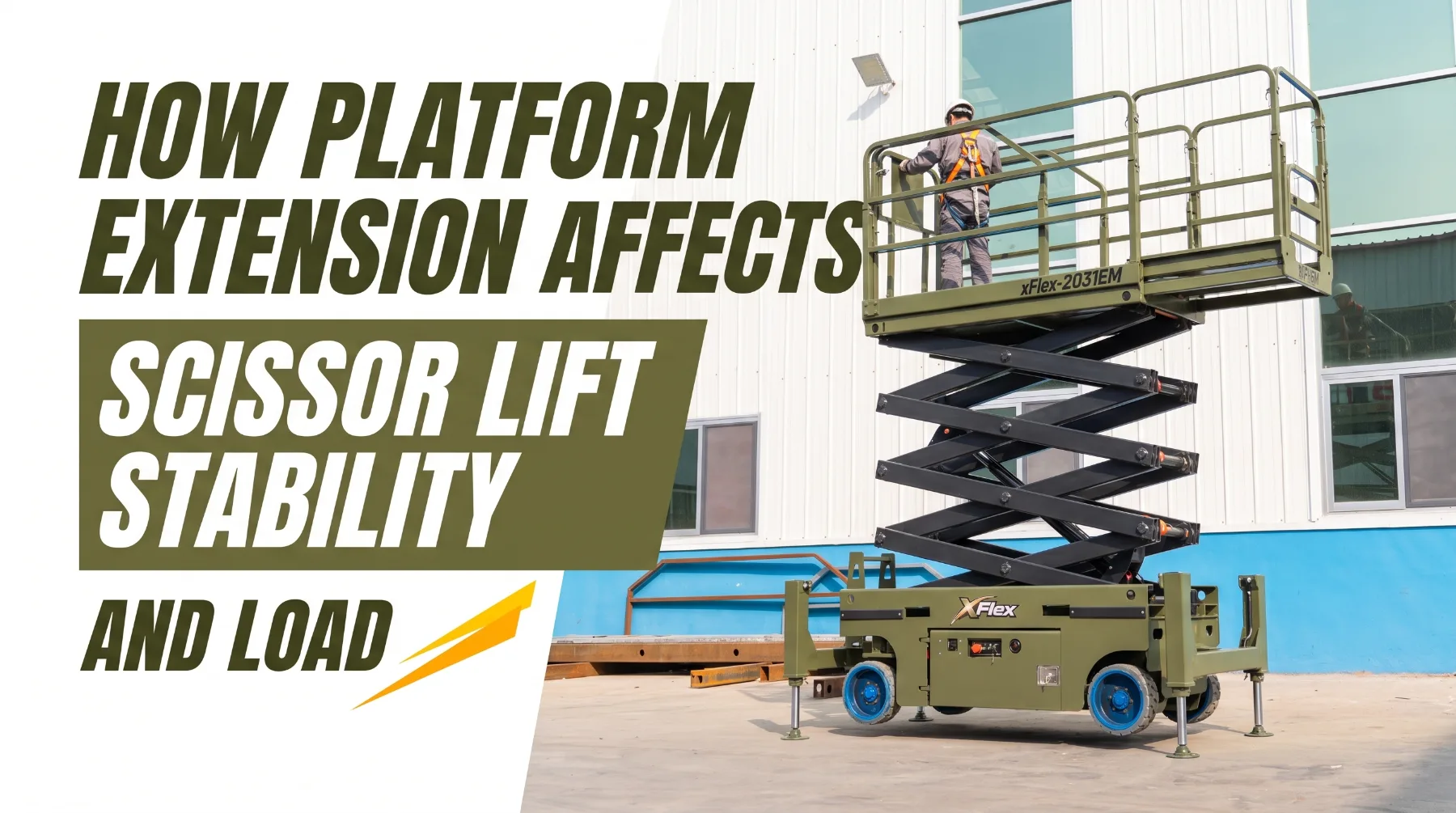
A scissor lift platform extension changes the machine’s load distribution as the deck moves outward. Extending the platform shifts part of the usable load farther from the lift’s center of support, increasing the overturning moment created by the combined weight of occupants, tools, and materials. This changes the stability conditions of the machine and can reduce the allowable platform capacity when the extension is deployed. The effect becomes more significant as the platform rises because the elevated load increases the consequences of any shift in the machine’s center of gravity or uneven weight distribution.
Platform extensions must therefore be evaluated together with rated capacity, extension position, working height, machine configuration, ground conditions, and load placement. The manufacturer’s capacity rating determines the maximum permitted load for each operating configuration and should not be treated as the same value regardless of platform position. Concentrating heavy materials at the outer end of an extended deck can increase the overturning moment even when the total load remains below the nominal platform capacity. Keeping the load within the specified rating, distributing weight appropriately, using a level and stable surface, and following the manufacturer’s extension and capacity limits are essential for maintaining predictable stability throughout the lift cycle.
How Platform Extensions Work and Why They’re Used
Most scissor lifts include a roll-out deck extension, a section of the platform that slides horizontally beyond the main deck and locks into place. The operator releases a latch, pushes the extension out over the work area, and secures it, gaining working length without repositioning the whole machine. Some lifts offer extensions on one end; larger models sometimes offer them on both.
The appeal is obvious. An extension lets a crew reach over an obstacle, work closer to a wall or structure, or cover more area from a single setup. On a tight or cluttered site, that saved repositioning adds up to real productivity across a shift. But an extension is a working tool with limits built into it, not simply extra deck to load at will. Every extension carries its own rated capacity, and using it safely starts with respecting that.
Key takeaway: A platform extension slides the deck out to gain reach from a single setup, but it comes with its own limits that must be respected, not treated as free extra space.
How Extending the Platform Shifts the Center of Gravity
Every scissor lift is engineered around a center of gravity, the balance point of the machine and everything on it. When that point stays within the footprint of the base, the lift is stable. Push it toward the edge of that footprint, and stability erodes fast.
Extending the platform moves weight outward, away from the center of the base. The deck itself, plus any workers, tools, and materials riding on the extended section, now sit farther from the machine’s centerline. That shifts the combined center of gravity toward the extended end, closer to the tipping edge of the footprint. The machine hasn’t grown a wider base to compensate, it’s simply carrying its load farther out over the same wheels.
This is the core reason an extension changes everything about how the lift behaves. Weight concentrated out on the extended deck has far more leverage to tip the machine than the same weight sitting over the center. Understanding that shift is the foundation for every load and safety decision that follows.
Key takeaway: Extending the deck moves the load outward and shifts the center of gravity toward the tipping edge, reducing stability without widening the base that has to support it.
Why Platform Extension Reduces Rated Load Capacity
Because an extended deck shifts weight outward, manufacturers rate a lift’s capacity differently depending on whether the extension is stowed or deployed. Nearly every scissor lift carries two figures: a higher rated capacity with the platform retracted, and a lower rated capacity when the extension is out. Both appear on the machine’s data plate for a reason.
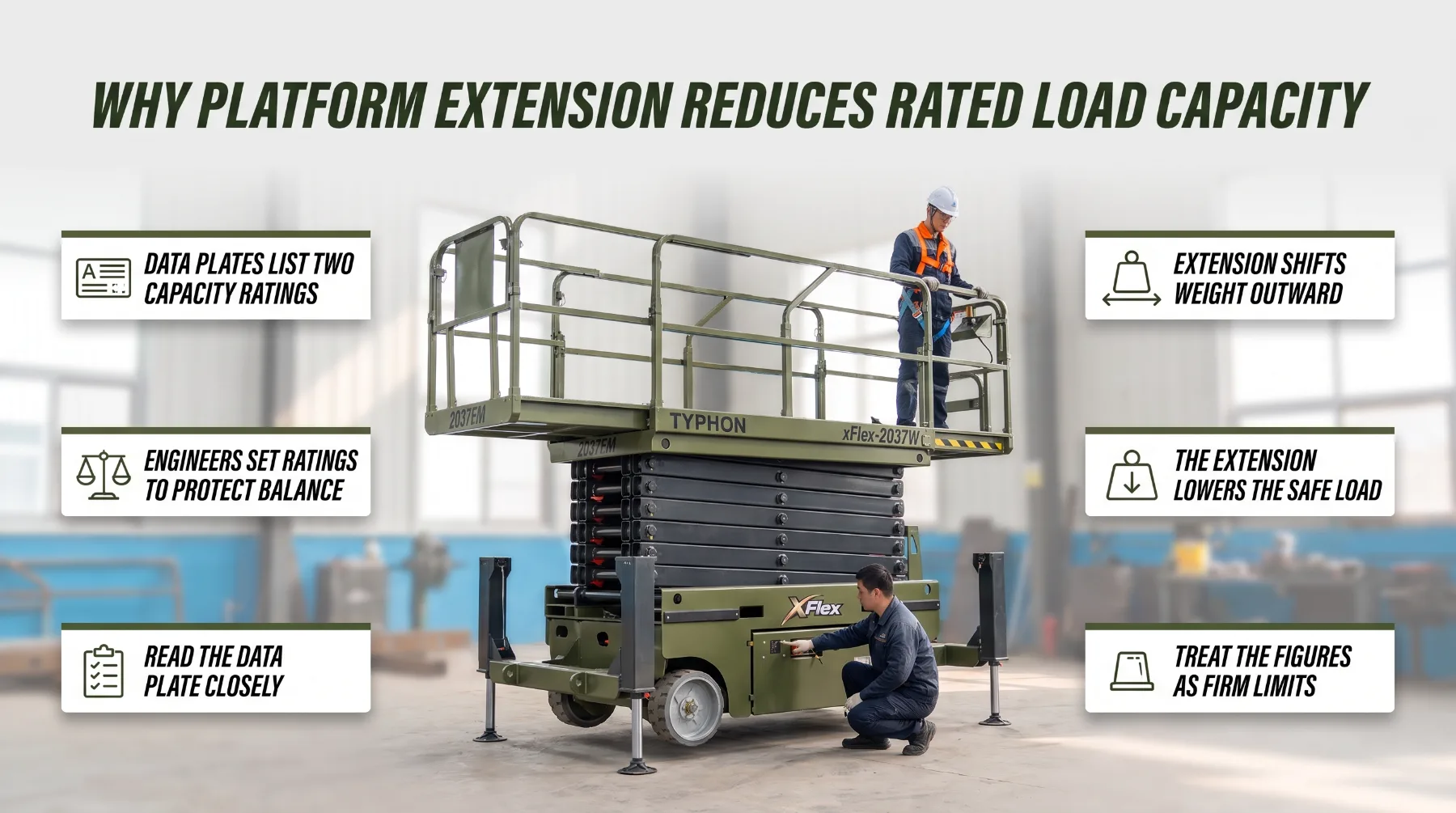
The drop isn’t arbitrary. Engineers set the extended rating to keep the center of gravity safely within the machine’s stability limits even with weight out on the extension. A load that sits comfortably within the retracted rating can push the machine past its safe balance point once that same weight moves out onto the extended deck. So the extension doesn’t just add a smaller separate limit, it lowers the safe load for that portion of the platform specifically.
Read the data plate closely, because the numbers vary by machine. Some list a maximum load for the extension deck that’s markedly lower than the main platform’s rating. Treat those figures as firm limits, not suggestions. They reflect the exact point where the manufacturer’s testing says the machine stays stable.
Key takeaway: Scissor lifts carry a lower rated capacity when the extension is deployed, and that reduced figure is a firm limit set to keep the machine within its safe balance point.
The Safety Risks of Ignoring Reduced Load Ratings
Loading an extended platform to its retracted rating is one of the most dangerous mistakes an operator can make, because the machine offers little warning before it fails. A lift that feels perfectly solid can reach its tipping point suddenly once weight out on the extension pushes the center of gravity past the base.
The consequences are severe. A tip-over from height throws workers from the platform, drops the load, and can crush anyone below. Even without a full tip, overloading the extension stresses the deck structure, the slide mechanism, and the machine’s frame beyond their design, inviting a structural failure that’s just as dangerous. These aren’t remote possibilities, overloading and operating out of balance are among the leading causes of serious scissor lift incidents.
The risk compounds because operators often don’t feel the danger of building. Unlike a machine that visibly strains, a lift near its extended tipping point can look and feel stable right up until it isn’t. That’s exactly why the rated figures exist and why they must be honored. Never load the extension beyond its rating to save a trip or finish faster. No schedule is worth the outcome.
Key takeaway: Ignoring the reduced extended rating invites sudden tip-over and structural failure with little warning, so the extension’s limit must be honored every time, without exception.
How Lift Height Compounds the Stability Concern
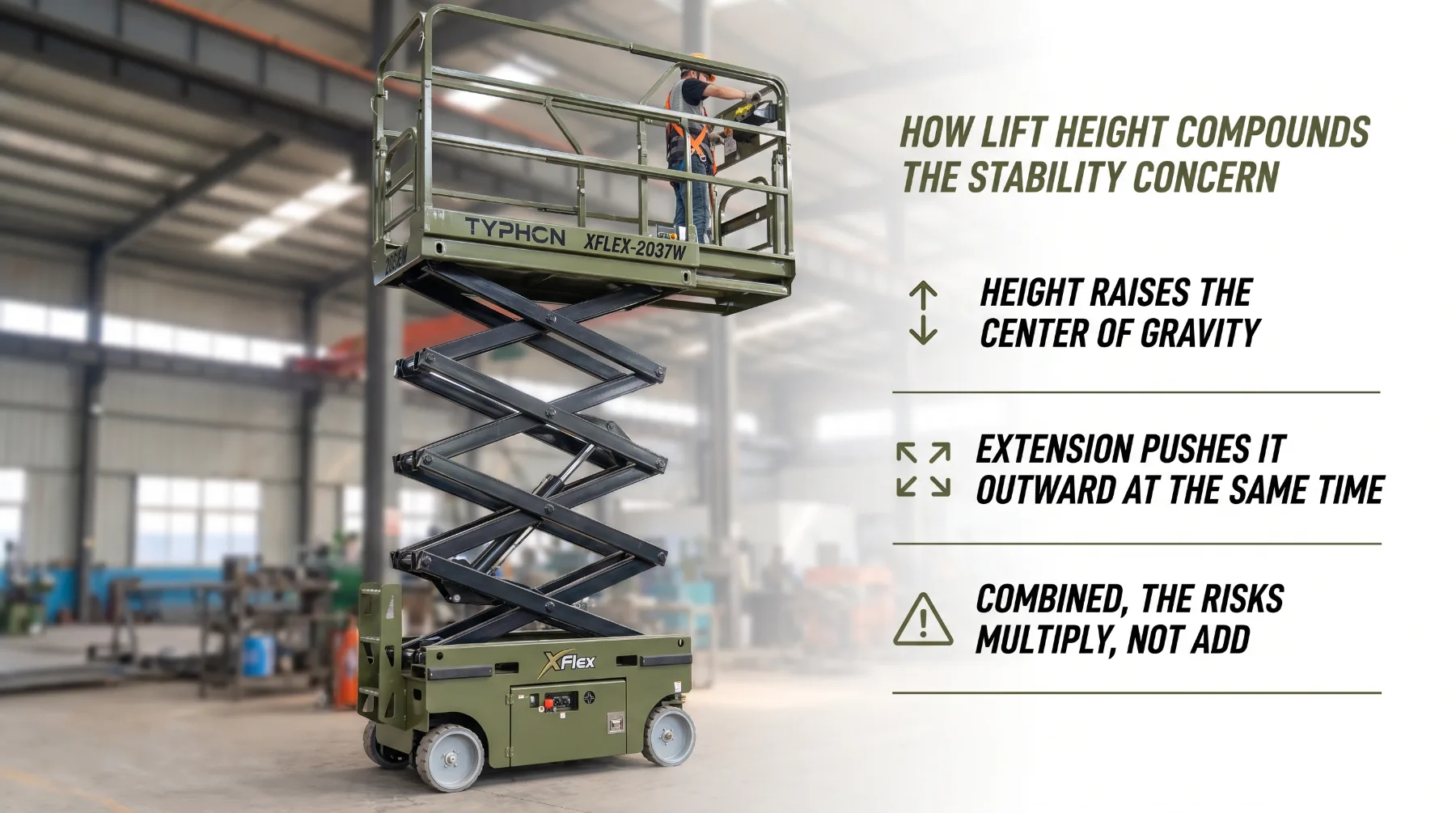
Platform extension and lift height each challenge stability on their own. Combine them, and the risks multiply rather than simply add.
Raising the platform lifts the center of gravity higher off the ground, which makes the machine inherently more sensitive to any force that would tip it, an uneven surface, a gust of wind, or weight positioned off-center. A tall, raised lift already sits closer to its stability limits than a low one. Now extend the deck at that height, and you push the center of gravity outward at the same time you’ve raised it up. The machine is balancing a load that’s both high and reaching out, the two most destabilizing positions at once.
This is why the most demanding conditions stack height and extension together. A fully raised lift with the deck extended and loaded is working at the outer edge of its safe envelope, where a small disturbance can have an outsized effect. Manufacturers account for this in their ratings and controls, which is exactly why extended capacities and any height-related limits must be followed together, not weighed one at a time. When you’re both high and extended, treat the machine’s limits as absolute.
Key takeaway: Raising the platform and extending the deck compound each other, putting the load both high and far out at once, so height and extension limits must always be respected together.
Conclusion
A platform extension changes a scissor lift’s load distribution and stability because extending the deck moves the effective load position farther from the machine’s center of support. This increases the overturning moment and can reduce the allowable platform capacity when the extension is deployed, which is why manufacturers specify separate ratings for the main deck and extended configuration. Operating height further affects stability because raising the platform increases the machine’s center of gravity and can increase sensitivity to uneven surfaces, wind, slopes, and dynamic loads. The combined effect of platform extension, elevated height, payload, and surface conditions must therefore remain within the manufacturer’s specified operating envelope. Heavy materials should be positioned according to the approved load distribution and load-center requirements rather than concentrated at the outer edge of the extension, while the machine should be operated only on surfaces permitted by the manufacturer. Before selecting or operating a scissor lift, operators should verify the data plate and manual for platform capacity, extension capacity, maximum working height, allowable slope, wind limitations, and other configuration-specific restrictions. Evaluating these parameters together ensures that the lift can provide the required horizontal reach and working height without exceeding its structural or stability limits.
Frequently Asked Questions
Why does my scissor lift have a lower weight limit when the platform is extended?
Extending the deck moves weight farther from the machine’s center, shifting the center of gravity toward the edge of the base. This reduces the lift’s stability, so manufacturers set a lower rated capacity for the extended position. The extended rating is a firm safety limit based on stability testing and should always be followed.
Is it safe to load the extension deck to the same capacity as the main platform?
No. The extension has its own rated capacity, which is typically lower because weight placed farther outward creates more tipping leverage. Exceeding this limit can affect machine stability and overstress the extension mechanism. Always follow the data plate and keep heavier loads positioned over the main platform whenever possible.
How does raising the platform change the risk when the deck is extended?
Raising the platform increases the center of gravity, making the lift more sensitive to uneven ground, wind, and off-center loads. Extending the deck at height pushes the center of gravity outward as well, increasing the combined stability risk. When working high and extended, follow the machine’s rated limits and pay close attention to ground and wind conditions.
