Free Shipping Within USA | 1-year Warranty

Why Cabin Models Handle Engine Heat Differently Than Canopy Models
Why Cabin Models Handle Engine Heat Differently Than Canopy Models
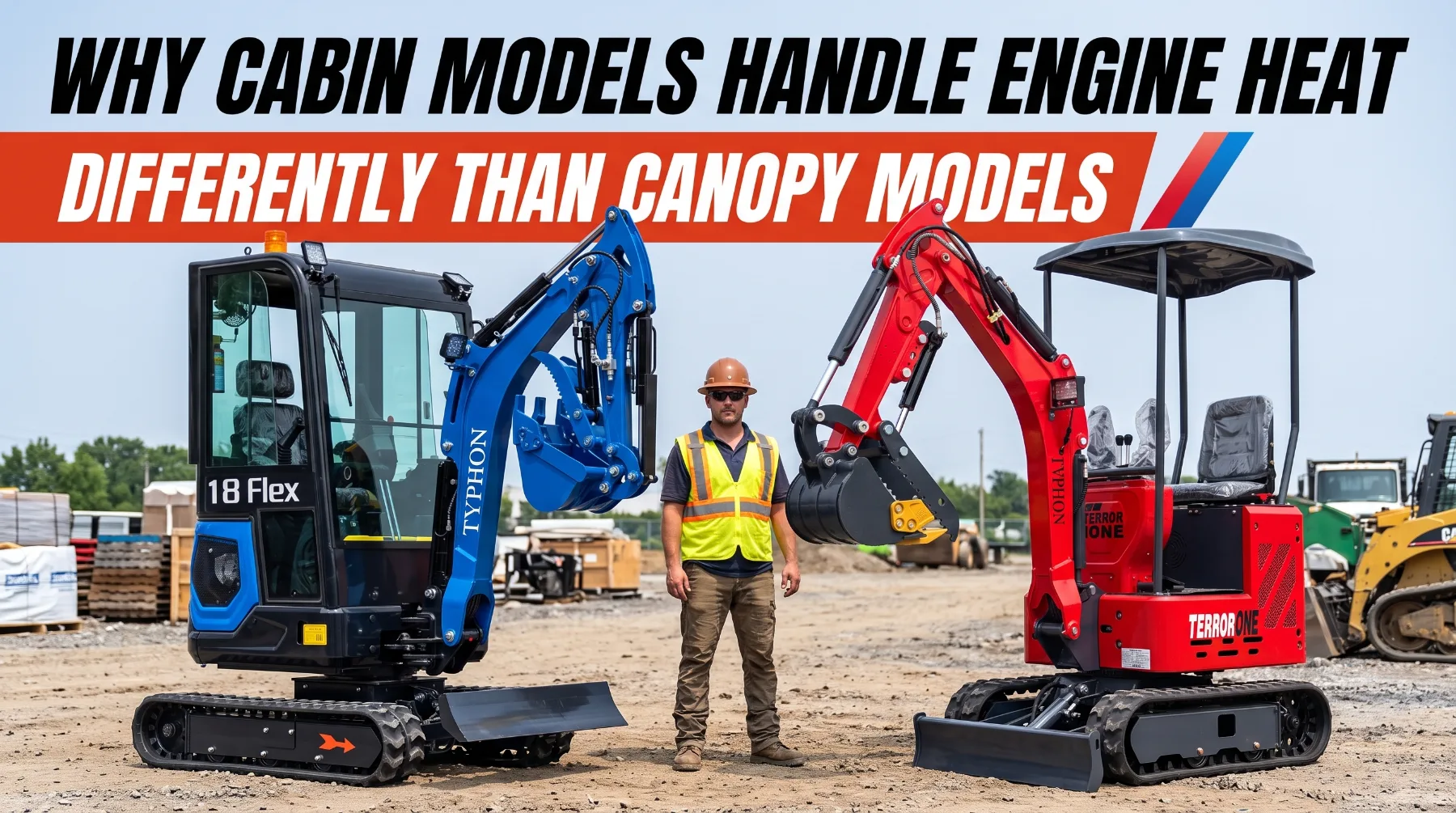
A landscaping crew runs two nearly identical mini excavators on a job site in late July, and by noon the operators notice something the spec sheets never mentioned. One machine is a canopy model, open on the sides with a simple overhead guard, and the other is a fully enclosed cabin model with air conditioning humming inside. Both dig the same trenches in the same heat, yet the operator in the canopy machine feels the engine warmth wash over him with every swing, while the one in the cabin sits cool and steady behind sealed glass. At the end of the shift, a supervisor asks the obvious question: are these two machines actually managing engine heat the same way, or does the enclosure change more than just operator comfort? The answer sits at the heart of a choice many buyers make without a second thought, and understanding it is what separates a machine that suits your climate and workload from one that fights both.
Cabin and canopy mini excavators handle engine heat in genuinely different ways, because the enclosure around the operator changes how air moves, how the cooling system breathes, and how the whole machine sheds the warmth its engine produces. Knowing why that difference exists, how each design manages airflow, and how it shapes both operator comfort and engine performance helps you choose the right machine for your climate and your work.
Why Engine Heat Management Differs Between Cabin and Canopy Designs
Enclosure is the whole reason the two designs behave differently, because the structure surrounding the operator changes how heat travels away from the machine. A canopy model leaves the operator’s area open to the surrounding air, with a roof and rollover protection but no sealed walls, so heat radiating from the engine compartment disperses freely into the open. A cabin model wraps that same operator area in glass and steel, which changes the path that heat and air must follow around the machine.
Separation of spaces is where the cabin design earns its distinct behavior, since a sealed cabin creates two environments rather than one. The engine bay and the operator space become separate zones, each managed on its own terms, so the machine must actively move heat out of the engine compartment while keeping it away from the sealed cabin. A canopy machine, by contrast, treats the whole area as one open space where heat simply drifts away on its own.
Design intent shapes everything that follows, because manufacturers engineer each model around the environment it faces. A cabin machine is built with the sealing, ventilation, and often climate control needed to keep the operator comfortable while still cooling the engine, whereas a canopy machine relies on open exposure and a simpler cooling path. Key takeaway: the enclosure defines how a mini excavator manages engine heat, because a sealed cabin separates the engine and operator zones while an open canopy lets heat disperse freely into the surrounding air.
How Airflow and Ventilation Work in Each Model
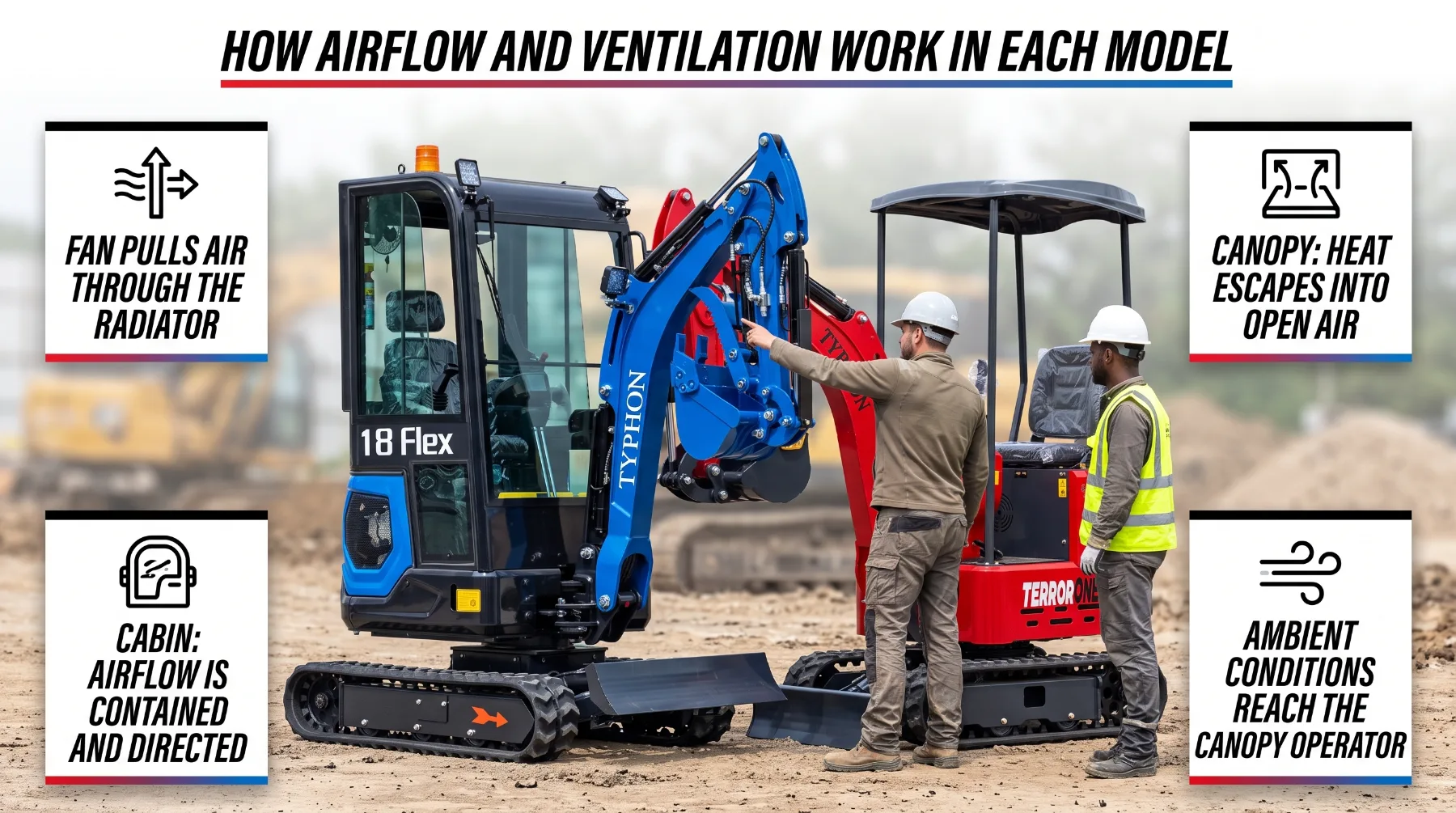
Airflow tells the real story of engine heat, because a mini excavator sheds most of its engine warmth by moving air across a radiator and out through the machine. In both designs, the cooling fan pulls air through the radiator and oil coolers, carrying heat away from the engine, so the path that air takes to enter and leave the machine matters enormously. The difference between the two models comes down to how freely that air moves and where the operator sits relative to it.
Open exposure defines ventilation on a canopy machine, since the operator area sits in the open air with nothing sealing it off from the surroundings. Heat that escapes the engine compartment moves into the open rather than being trapped, and any breeze across the site helps carry warmth away, so the operator feels the ambient conditions directly, engine heat included. The upside is simplicity; the downside is that the operator has little buffer from either the engine’s warmth or the weather.
Sealed ventilation defines the cabin machine, which manages air deliberately rather than leaving it to chance. A cabin uses sealed panels, filtered vents, and a heating and cooling system to control the air the operator breathes, while the engine bay keeps its own separate airflow path to feed the radiator and expel heat. This means the cabin machine runs two managed air systems at once, one for the engine and one for the operator. Key takeaway: a canopy model ventilates through open exposure that lets engine heat disperse naturally, while a cabin model runs separate managed airflow for the engine bay and a sealed, climate-controlled path for the operator.
How Enclosure Affects Cooling System Performance
Cooling performance depends on how easily the engine bay can breathe, and the enclosure influences this more than buyers often expect. A mini excavator’s radiator and coolers need a steady supply of fresh air drawn in and hot air pushed out, so any design that restricts that flow forces the cooling system to work harder. Both cabin and canopy machines are engineered to cool their engines adequately, but they reach that goal along different paths.
Airflow demand rises in a sealed design, because a cabin machine must keep engine heat away from the operator compartment while still feeding the radiator all the air it needs. Manufacturers answer this with carefully routed ducting, dedicated intakes, and cooling packages sized to move enough air through a more contained engine bay, so the cabin machine relies on engineering rather than open exposure to stay cool. When that system is designed and maintained well, the cabin machine cools its engine just as reliably as an open one.
Maintenance carries extra weight on both designs but especially where airflow is tightly managed, since anything blocking the intakes or clogging the radiator chokes the cooling path. Debris packed against a radiator, a dirty air filter, or blocked vents all reduce the airflow the engine depends on, and a machine with a more contained engine bay feels those restrictions sooner. Key takeaway: both designs cool their engines effectively, but a cabin model depends on engineered ducting and cooling packages to move air through a contained bay, so keeping intakes and radiators clear matters to steady performance.
How the Operator Environment Connects to Engine Heat Behavior
Operator comfort links directly to engine heat, because the whole point of a sealed cabin is to shield the person running the machine from conditions the canopy exposes them to. On a canopy machine, the operator shares the open air with the engine’s radiant warmth, so on a hot day the heat rising from the engine bay adds to whatever the weather already delivers. The operator feels the machine working, for better and worse.
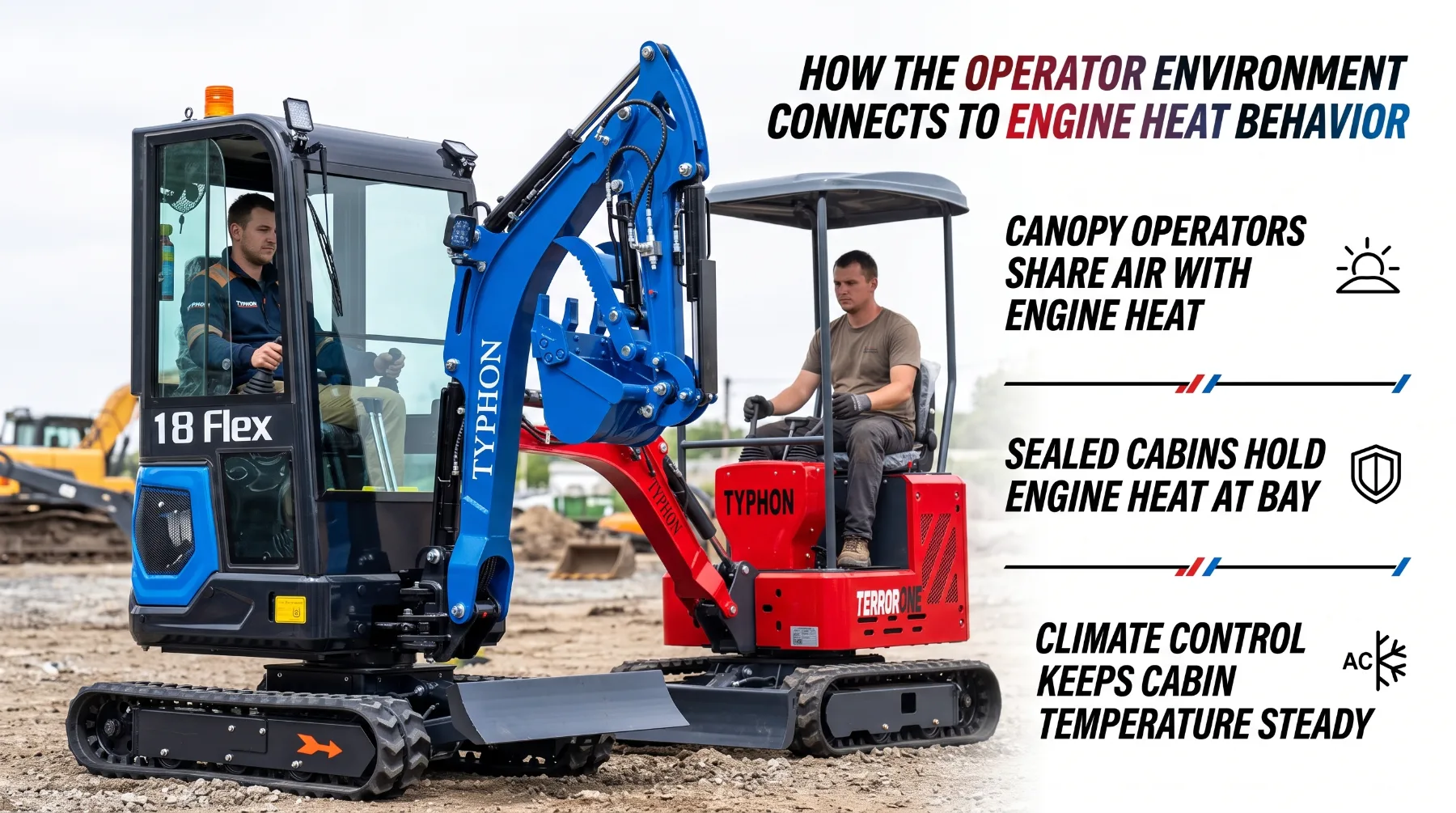
Isolation changes the experience on a cabin machine, since sealed panels and a climate system hold the engine’s heat at bay and keep the operator’s space at a steady temperature. The cabin’s air conditioning cools the operator compartment independently of what the engine is doing, so an operator can work through a scorching afternoon without the engine’s warmth adding to the strain. That comfort translates into steadier focus and less fatigue across a long shift.
Productivity ties the two together in a way owners should weigh, because a comfortable operator works longer and more consistently than one battling heat. A canopy machine may suit shorter tasks or mild conditions perfectly well, while extended work in punishing heat rewards the cabin’s isolation with fewer breaks and steadier output. Key takeaway: the operator environment reflects how each design handles engine heat, since a canopy exposes the operator to that warmth while a cabin isolates them behind climate control, and that comfort shapes focus and endurance over a shift.
Ambient Temperature and Climate Considerations for Each Design
Climate should weigh heavily on the choice between the two, because the surrounding temperature interacts with each design differently. In hot weather, a canopy machine offers open-air ventilation and often a welcome breeze, which many operators prefer over a stuffy enclosure, yet it leaves the operator fully exposed to both the sun and the engine’s warmth with no relief but shade. The open design shines when the air itself is comfortable and struggles when it turns extreme.
Cabin machines answer climate extremes with control that a canopy cannot match, since a sealed, air-conditioned cabin keeps the operator comfortable whether the day is blazing hot or bitterly cold. In cold climates, the cabin’s heating keeps the operator warm and the glass clear, while in high heat the air conditioning holds the space cool regardless of the engine’s output, so the machine performs across a far wider range of conditions. That versatility is exactly why cabin models dominate in regions with harsh seasons.
Cooling system margins deserve thought in extreme heat regardless of design, because very high ambient temperatures narrow the gap between the air and the engine’s operating temperature. Both machines rely on clean radiators and clear airflow to shed heat, and in the hottest conditions that maintenance becomes essential to keep either design cooling reliably. Key takeaway: a canopy model suits mild or breezy conditions where open air is an asset, while a cabin model handles temperature extremes through climate control, so your local climate should weigh heavily in the decision.
How to Choose the Right Model for Your Heat Management Needs
Climate and workload should lead the decision, because the conditions you work in most often anchor which design serves you best. Avoiding common mini excavator buying mistakes starts with matching the machine to your actual working conditions. Name the temperature range your crew faces across the year, count how many hours a typical shift runs, and consider whether your operators spend long stretches in the seat or move between tasks, since long shifts in extreme heat or cold point strongly toward a cabin. Matching the machine to your real conditions keeps operators comfortable and productive rather than fighting the weather.
Work environment shapes the choice alongside climate, since the type of site and material influences which design fits. Dusty, debris-heavy work rewards a sealed cabin with filtered air that keeps grit away from the operator, while open, mild-weather jobs may favor the simplicity and lower cost of a canopy, so weighing your typical site against each design guides the fit. Consider too that a cabin adds weight and cost, which matters for transport and budget.
Guidance from a knowledgeable equipment source turns these factors into a confident purchase, because matching a machine’s heat management to a real workload rewards experience. Describing your climate, your shift lengths, your sites, and your operators to a trusted specialist lets them recommend the design built for the conditions you actually face rather than a generic guess. Key takeaway: choose between cabin and canopy by weighing your climate, shift length, and work environment together, and lean on a trusted specialist so the machine’s heat management suits the conditions where it earns its keep.
Conclusion
Cabin and canopy mini excavators manage engine heat along genuinely different paths, and the full picture holds once you follow each piece in turn. Start by recognizing why the enclosure defines heat management, since a sealed cabin separates the engine and operator zones while an open canopy lets warmth disperse freely. Understand how each design ventilates, with the canopy relying on open exposure and the cabin running separate managed airflow for the engine and the operator. See how a sealed enclosure asks more of the cooling system yet cools just as reliably when engineered and maintained well, and appreciate how the operator environment reflects that heat behavior through exposure or climate-controlled isolation. Weigh how ambient temperature favors the canopy in mild conditions and the cabin in extremes, then match the design to your climate, shift length, and work environment. This approach helps you choose a machine that keeps both the engine and the operator working steadily rather than one that struggles against your conditions. Before your next purchase, name your climate, tally your typical shift, and describe your sites so the model you pick suits the heat your work brings. When you’re ready to put a dependable mini excavator matched to your climate and workload to work, or need help weighing cabin against canopy for your operation, reach out to a trusted equipment specialist who can match reliable equipment to the results your work depends on.
Frequently Asked Questions
Does a cabin mini excavator overheat more easily than a canopy model?
Not if properly designed and maintained. Both can cool reliably, but cabin models depend more on clear air intakes, radiators, and cooling airflow.
Is a canopy model better in hot weather because it’s open?
Not always. A canopy provides natural airflow, but operators remain exposed to heat and sun. A cabin with air conditioning can provide better comfort during long shifts in extreme heat.
Which model should I choose for a region with both hot summers and cold winters?
A cabin model is usually better for year-round use because it provides heating in winter and air conditioning in summer. Choose a canopy for shorter shifts, milder weather, or lower upfront cost.