Free Shipping Within USA | 1-year Warranty

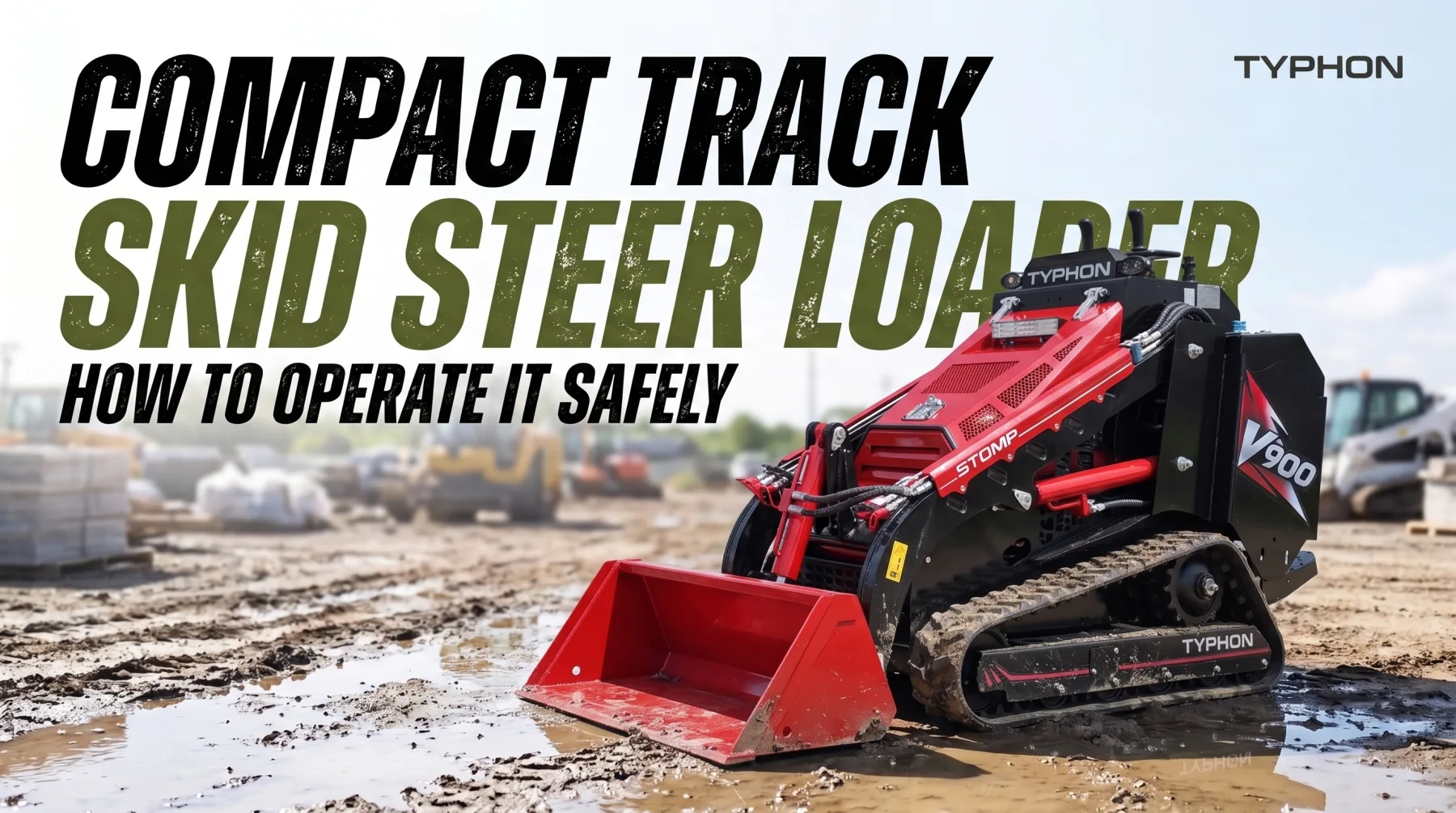
How to Operate a Compact Track Skid Steer Loader Safely
How to Operate a Compact Track Skid Steer Loader Safely
A grading crew rolls onto a soft, rain-soaked lot at first light, and a newer operator climbs onto the compact track skid steer loader to move a few pallets before the rest of the team arrives. Eager to get ahead, he skips the walkaround, raises the load high while crossing a slope, and feels the machine start to lean as the tracks bite unevenly into the mud. A half-second of panic and a quick correction saved it from tipping, but it was closer than anyone would want. Nobody planned for that near miss, yet rushing around a heavy tracked machine on unstable ground rarely ends clean. Safe operation isn’t about slowing the job down. It’s about running the loader the right way so the work moves smoothly and everyone goes home whole.
Operating a compact track skid steer loader safely comes down to a dependable routine: inspect before you start, mount and power up in order, control your travel and loads, run attachments within their limits, work smart around the crew, and shut down without leaving a hazard behind. Nail that sequence and the machine does clean, productive work while keeping you and the site protected. Here is how to run it right from the first check to the last pass.
Start With a Pre-Operation Inspection
Before the engine ever turns over, walk the machine. A quick, honest inspection catches small problems before they turn into breakdowns or injuries, and it costs only a few minutes against a full shift of trouble avoided. Check the fluid levels first, engine oil, hydraulic fluid, coolant, and fuel, since a low hydraulic reservoir robs the machine of the power its attachments and lift arms depend on.
Give the undercarriage a close look next, because the tracks are what set this loader apart. Scan the rubber tracks for cuts, embedded debris, missing lugs, and proper tension, and clear packed mud or rock from the rollers and sprockets before it grinds them down. From there, test the controls while the machine sits still, running through the lift, tilt, drive, horn, backup alarm, and lights. Look underneath for leaks, confirm the safety devices and seatbelt work, and clear any clutter off the cab floor. Running a proper maintenance check every morning keeps the guesswork out of it and flags a failing part before it strands you on the job.
Mount and Start the Machine the Right Way
Climbing on safely sets the tone for the whole shift. Face the machine, use the grab handles and steps as they were built to be used, and keep three points of contact as you settle into the seat, never hopping on or off. Once you’re seated, lower the safety bar, fasten the seatbelt, and adjust the seat and mirrors so you can see the bucket edge and the ground around the tracks before anything moves.
Powering up follows its own order. Confirm the controls sit in neutral and the loader arms are down, then start the engine and let it warm to operating temperature before you put it to work. While it warms, run a quick function check, easing the lift and tilt through their range and tapping the drive controls at a crawl to confirm the machine responds the way it should. A loader that hesitates or drifts during that check is telling you something, so sort it out before you head into the work rather than after.
Control Travel and Load Handling
Smooth, deliberate movement is the heart of safe operation. Keep your travel speed matched to the ground and the load, since a slower, controlled pace gives you far more time to react on soft or uneven terrain than charging ahead does. Carry the bucket or attachment low while traveling, roughly a foot off the ground, because a low load keeps the machine’s center of gravity down and the tracks planted where they belong.
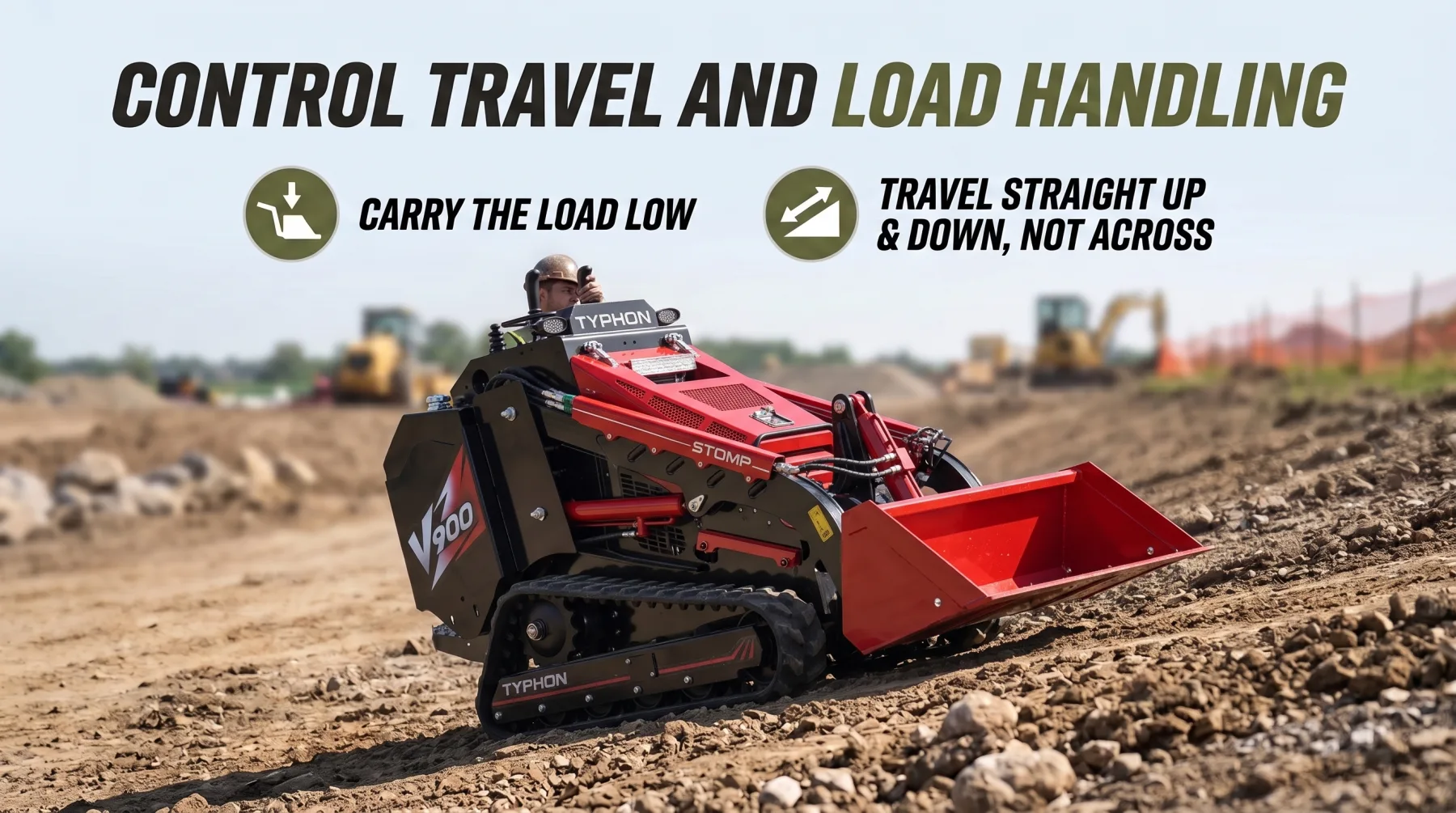
Slopes deserve real caution. Travel straight up and down a grade rather than across it, and keep the heavy end pointed uphill, which usually means driving up with the load ahead of you and backing down with it. Rushing a turn on a slope, swinging a raised load sideways, or spinning the tracks in mud are the fastest ways to lose stability. Ease into direction changes, avoid sudden stops that shove a load forward, and never exceed the machine’s rated operating capacity, since an overloaded loader tips or strains its hydraulics long before you expect it to. Steady inputs and a planned path give you both cleaner work and a machine that stays predictable under your hands.
Operate Attachments Within Their Limits
Attachments turn a compact track skid steer loader into a whole toolbox, but each one changes how the machine behaves. Match the attachment to the job and to the loader’s hydraulic flow and lift rating, since running a demanding tool on an underpowered machine bogs it down and wears it out fast. Confirm the attachment is locked onto the coupler fully before you lift, because a partially latched bucket or forks can drop or shift under load.
Connections matter just as much as the mount. Couple the hydraulic lines cleanly, relieve pressure before connecting or disconnecting so a line doesn’t whip loose, and keep bystanders clear whenever you swap tools. Different attachments carry different weights and reach, so a grapple or a set of forks shifts the machine’s balance in ways a bucket doesn’t, and adjusting your speed and load height to suit each one keeps you stable. Knowing your attachment options helps you pair the right tool with the work before you ever start the engine.
Using attachments correctly also improves productivity and extends the service life of both the loader and the tools. The right attachment allows operators to complete tasks more efficiently while reducing unnecessary strain on hydraulic systems, lift components, and the undercarriage. Taking time to understand each attachment’s operating requirements helps prevent damage, improves machine control, and ensures the skid steer delivers consistent performance across different applications.
Build Safe Habits Around the Site
Good operation reaches past the machine to how you work around everyone else on site. Stay aware of the ground crew at all times, since a compact track skid steer loader shares tight space with workers on foot and its lift arms create real blind spots. Keep people out of your travel path, use the horn at blind corners, and make eye contact with the crew before you move whenever you can, because a spotter helps most exactly when visibility drops.
Environment shapes every decision, so read the ground before you commit to it. Watch for soft spots, hidden trenches, drop-offs, overhead lines, and buried utilities that a heavy tracked machine can find the hard way. Wear the seatbelt every time, keep the safety bar down, and never carry riders or lift anyone on the attachment. Follow the safe operating practices laid out for the machine and the site on every shift, and don’t let a tight deadline talk you into skipping a step. A careful, well-trained operator on stable ground gets more done safely than a rushed one ever will.
Shut Down and Park the Loader Safely
Ending a task or a shift the right way protects the machine and everyone near it. Bring the loader to rest on firm, level ground whenever you can, well clear of traffic lanes, drop-offs, and active work areas. Lower the bucket or attachment flat to the ground before you do anything else, since a raised load left in the air is a hazard to anyone who walks past and a strain on the hydraulics overnight.
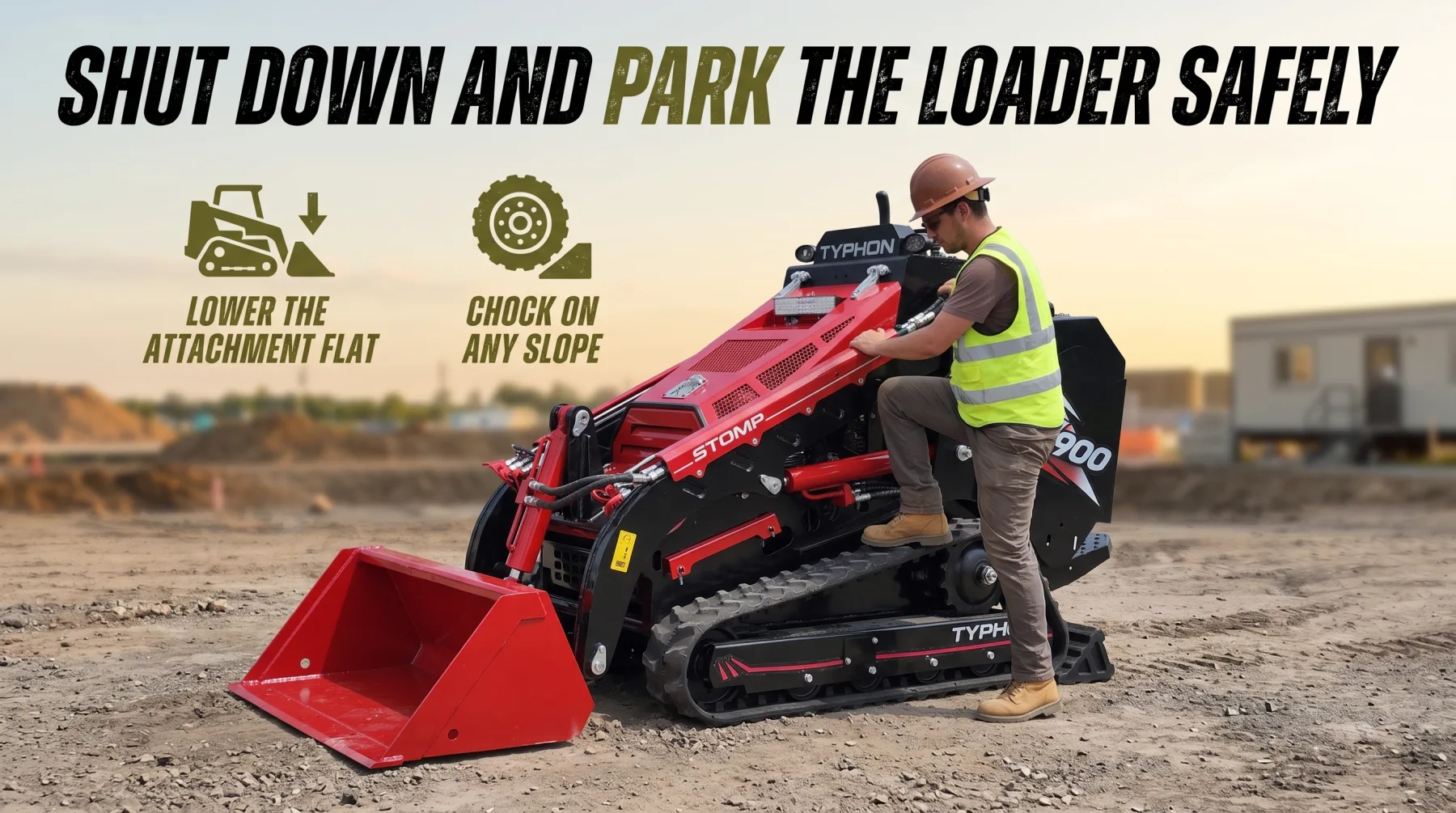
Powering down follows a clear order too. Set the controls to neutral, ease the engine to idle, and let it cool briefly before you cut it off rather than killing it hot. Relieve any hydraulic pressure, raise the safety bar, and unbuckle only after the machine is fully stopped and the arms are down. On any slope you can’t avoid, position the tracks across the fall line and leave the attachment grounded to hold the machine. Remove the key if the site calls for it, and dismount the same careful way you climbed on, facing the machine with three points of contact. A loader parked with a little thought stays put and stays safe until the next operator takes over.
Conclusion
Running a compact track skid steer loader safely comes down to following a dependable routine from the first check to the last. Inspect the machine and its tracks before you climb on, mount and start it in the right order, and let it warm while you confirm the controls respond. Keep your travel steady and your loads low, handle slopes straight up and down, and run attachments only within their rated limits and locked fully in place. Stay sharp around the crew, read the ground before you trust it, and shut down on firm, level ground with the attachment grounded and the brake habits set. Get that sequence right and you get productive, clean work without putting yourself or the site at risk. When you’re ready to put a reliable compact track skid steer loader to work, reach out to a trusted equipment specialist who can pair dependable machines with the results your projects depend on.
Frequently Asked Questions
What should I check before operating a compact track skid steer loader?
Walk the machine and confirm fluid levels, then inspect the rubber tracks for cuts, tension, and packed debris, test the lift, tilt, drive, horn, and backup alarm, and look underneath for leaks before you start the engine.
How do I stay stable on a slope with a compact track skid steer loader?
Travel straight up and down the grade rather than across it, keep the load low and the heavy end pointed uphill, and avoid sudden turns or swinging a raised load sideways, which are the fastest ways to lose stability.
How should I park a compact track skid steer loader at the end of a shift?
Stop on firm, level ground clear of traffic, lower the attachment flat to the ground, set the controls to neutral, let the engine idle down before shutting off, and raise the safety bar only once the machine is fully stopped.