Free Shipping Within USA | 1-year Warranty
What Causes Fast Wheel Loader Tire Wear?
A yard manager buys a used wheel loader and puts it straight to work loading aggregate off a rough gravel pad. He never checks the tire pressure, spins the wheels hard against every pile to fill the bucket faster, and lets the operators pivot the machine sharply on the abrasive surface all day. Six weeks in, the front tires are worn nearly bald on one side, cracked along the sidewalls, and one has chunked out a section of tread from spinning on sharp rock. A set of loader tires that should have lasted a year or more is finished in under two months, and the replacement bill lands harder than any repair he budgeted for. The machine ran fine the whole time. The tires paid the price for how it was run.
Fast tire wear on a wheel loader rarely comes down to bad luck or cheap rubber. It builds from underinflation, rough operating habits, harsh ground, poor maintenance, and mismatched tires until a set that should last for thousands of hours wears out in a fraction of that time. The encouraging part is that nearly every cause is within your control once you know what drives it. This post walks you through what actually wears loader tires fast and how to stop it: the inflation and pressure problems that quietly destroy rubber, the operating habits that grind tread away, the ground and site conditions that punish tires, and the maintenance and tire choices that make a set last. Sort these out, and your tires deliver the full life you paid for.
Recognizing How Inflation and Pressure Wear Tires
The fastest hidden cause of tire wear sits in something most operators never check: air pressure. A loader tire runs on the pressure inside it, and getting that number wrong wears the rubber in ways that are easy to miss until the damage is done. Correcting inflation first is the cheapest way to extend tire life.
How Underinflation Destroys a Tire
An underinflated tire flexes far more than it should as it rolls, and that constant flexing builds heat inside the rubber and the sidewall. Heat is the enemy of a tire, breaking down the structure until the sidewalls crack, the tread separates, or the tire fails outright. A soft tire also spreads its footprint wrong, so the edges scrub and wear far faster than the center.
Check the pressure before it costs you. Confirming the correct loader tire inflation pressure against the machine’s specification keeps the tire running at its designed shape and temperature. A tire held at the right pressure flexes the way it was built to, sheds heat properly, and wears evenly across the full tread instead of burning up from the inside.
The Cost of Overinflation
Too much air brings its own trouble. An overinflated tire rides hard and stiff, shrinking its contact patch so the center of the tread carries all the load. That narrow footprint wears the middle of the tire quickly while the shoulders stay fresh, cutting overall tread life short.
An overinflated tire is also fragile under impact. With no give to absorb a sharp rock or a hard edge, the stiff rubber is far more likely to cut, chip, or bruise when the machine rolls over debris. Matching the pressure to the load and the surface, rather than simply pumping the tire hard, keeps the whole tread working and the rubber resilient.
Uneven Pressure Across the Machine
A loader wears tires unevenly when its four tires don’t carry matching pressure. One soft tire drags against the others, scrubs the ground, and wears faster while forcing the machine to work harder. Mismatched pressure also throws off how the load sits, loading some tires more than they should carry.
Keep every tire on the same page. Checking all four pressures on a regular schedule, and setting them to spec for the work at hand, keeps the machine balanced and the wear even. A quick review of your wheel loader tire wear patterns often reveals a pressure imbalance before it ruins a tire, so let uneven wear point you back to the gauge.
Takeaway:: underinflation, overinflation, and uneven pressure across the machine are the quietest and most common causes of fast tire wear, so check and correct inflation before you look anywhere else.
Spotting the Operating Habits That Grind Rubber Away
Beyond air pressure, how an operator runs the machine decides how fast the tread disappears. A wheel loader can be driven in ways that spare its tires or in ways that shred them, and the difference is measured in months of tire life. Sharpening a few habits protects the rubber more than any premium tire ever will.
Wheel Spin and Excessive Force
The single hardest habit on loader tires is spinning the wheels. Ramming the bucket into a pile and flooring the throttle until the tires slip grinds the tread against the ground, tearing rubber away in a matter of seconds. Every spin on a hard or abrasive surface takes a visible bite out of tire life.
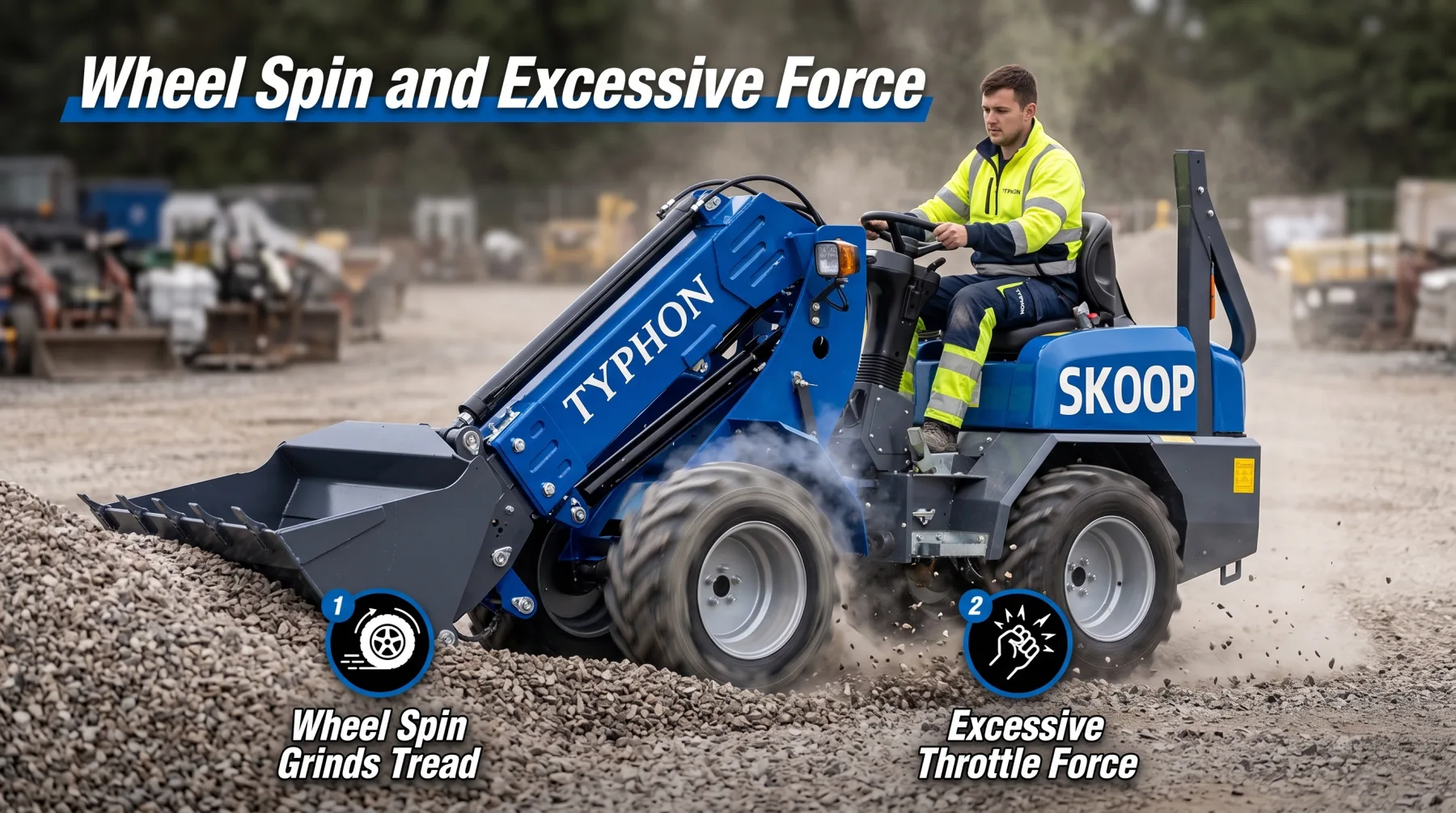
Fill the bucket with finesse instead of force. Easing into the pile, letting the bucket and hydraulics do the digging, and backing off the throttle the moment the tires break traction all spare the tread enormously. An operator who loads without spinning the wheels can easily double the life of a set compared to one who muscles every bucket.
Scrubbing on Sharp Turns
Tight, aggressive turns scrub the tread sideways across the ground, wearing it fast and unevenly. When a loader pivots sharply, especially under load, the tires drag rather than roll cleanly, scraping rubber off with every turn. Do that all shift and the tread wears out long before its hours are up.
Make turns wider and smoother wherever the site allows. Reducing tire scrubbing on turns by planning a gentler path and avoiding sharp pivots on abrasive ground keeps the tread rolling instead of dragging. Where a tight turn is unavoidable, easing off the load and speed through it softens the scrubbing that would otherwise shred the shoulders.
Speed, Braking, and Load Handling
Speed multiplies wear. Running fast across a hard or rough yard builds heat and grinds the tread harder, and long, quick travel between the pile and the dump point wears tires faster than a steady pace. Hard braking and sharp acceleration add their own scrubbing on top of that.
Handling the load matters just as much. Carrying an overloaded bucket forces the tires to work beyond their rating, building heat and flattening the footprint, while slamming to a stop scrapes the tread away. Keeping speeds sensible, loads within the machine’s rating, and movements smooth spares the tires across the whole shift.
Takeaway:: wheel spin, sharp scrubbing turns, and rough speed or load handling grind rubber away faster than anything else on site, so disciplined operation is the most powerful tool you have for making tires last.
Knowing the Ground and Site Conditions That Punish Tires
Even a well-inflated tire run by a careful operator wears fast on the wrong ground. The surface a loader works on has a direct and powerful effect on tire life, and some sites are simply harder on rubber than others. Reading your conditions lets you protect the tires against them.
Abrasive and Sharp Surfaces
Sharp, abrasive ground is brutal on tires. Crushed rock, broken concrete, jagged aggregate, and demolition debris all cut, chip, and grind the tread with every pass, wearing a tire far faster than soft soil or pavement ever would. Quarries, recycling yards, and demolition sites are the toughest environments a loader tire faces.
Manage the surface where you can. Keeping the work area clean of loose sharp debris, maintaining a smoother travel path between the pile and the dump point, and clearing spilled material all reduce the cutting and chipping. On genuinely abrasive sites, the ground itself is a cause of wear you plan around rather than eliminate, which makes tire choice and careful operation matter even more.
Heat and Long Travel Distances
Heat wears tires from within, and long travel distances generate plenty of it. A loader that hauls loads over a long cycle at speed builds heat in the rubber that softens it and speeds wear, especially on hot days. The farther and faster the machine runs, the hotter the tires get.
Shorten and cool the cycle where possible. Reducing travel distance between the pile and the dump, keeping speeds moderate on long runs, and giving tires a chance to shed heat all slow the wear that heat drives. On a hot site with a long haul, watching for the softening and rapid wear that heat causes helps you catch the problem before a tire fails.
Debris, Contamination, and Standing Hazards
Loose hazards on the ground quietly destroy tires. Nails, rebar ends, scrap metal, and sharp rock cause cuts and punctures, while spilled oil or chemicals can degrade the rubber over time. A yard littered with debris wears and damages tires far faster than a clean one.
Keep the site tidy to protect the rubber. Clearing debris regularly, cleaning up spills, and keeping travel lanes free of sharp material all cut the punctures and contamination that shorten tire life. A clean, well-kept site is one of the simplest and most overlooked ways to make a set of tires last its full life.
Takeaway:: abrasive surfaces, heat from long fast travel, and debris or contamination on the ground all punish loader tires hard, so managing your site conditions is a direct investment in tire life.
Evaluating Maintenance and Tire Choices That Make a Set Last
Much of tire life is won or lost through maintenance and the tires you fit in the first place. A well-cared-for tire matched to the work outlasts a neglected or mismatched one by a wide margin. These habits and choices are where an owner reclaims the most tire life over the long run.
Keep Up With Tire Maintenance and Inspection
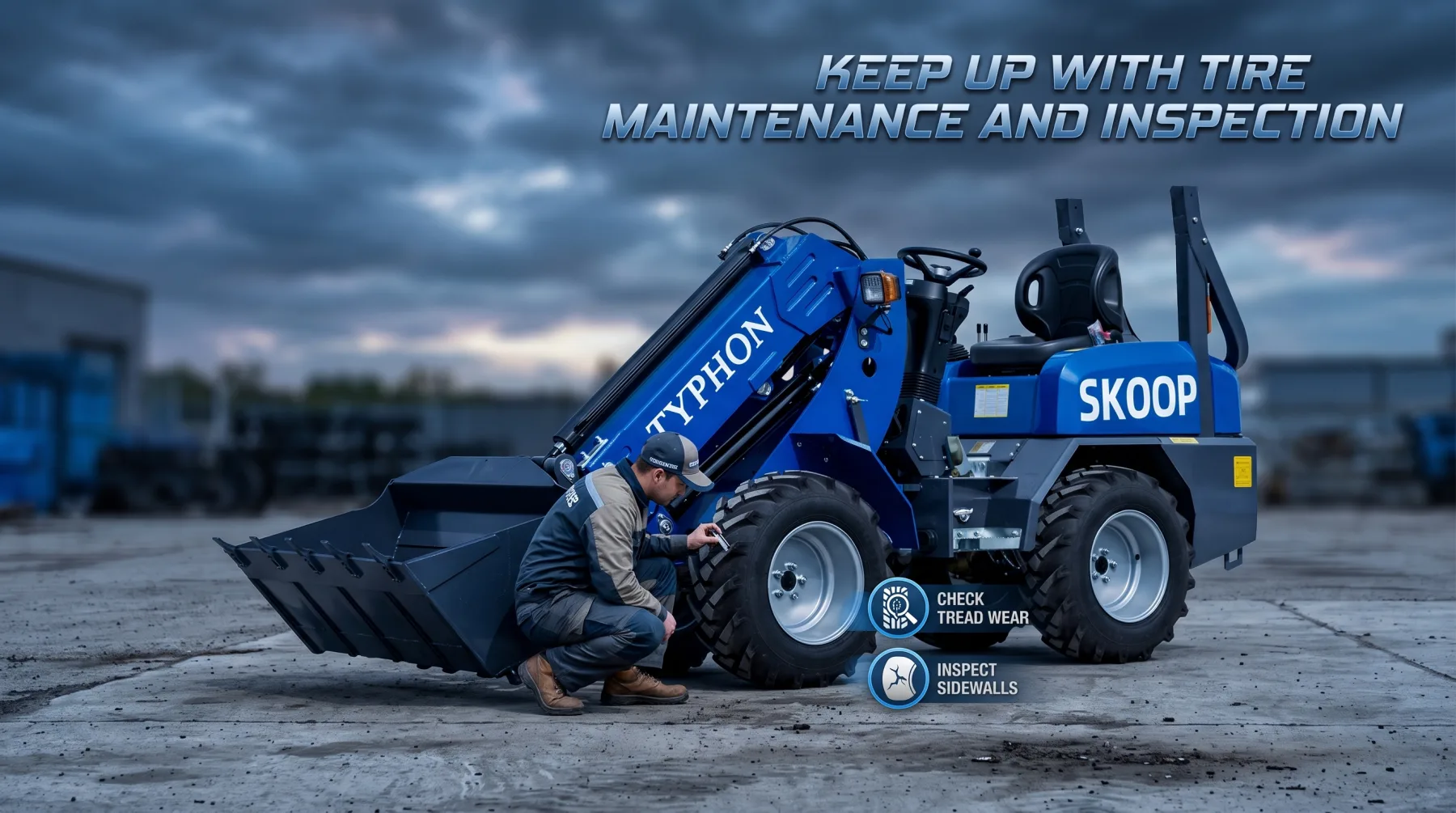
Regular inspection catches small problems before they end a tire. Checking the tread for uneven wear, the sidewalls for cracks and cuts, and the whole tire for embedded debris on a routine basis lets you fix a cause early rather than replace a ruined tire late. Uneven wear especially is a warning sign worth reading.
Tend the wheels and alignment too. Keeping the pressure correct on a schedule, ensuring the tires are seated and torqued properly, and watching for signs of misalignment that scrub the tread all protect the set. A tire rotated or repositioned when wear shows up unevenly can deliver far more total life than one left to wear out in one spot.
Match the Tire to the Job
The wrong tire wears fast no matter how well you treat it. A tire built for soft ground shreds quickly on sharp rock, while a smooth tire spins and wears on loose material. Choosing a tire whose tread pattern and construction suit your surface is the foundation of long tire life.
Consider a tougher option for harsh sites. On abrasive, cut-prone ground, a tire with deeper tread, a more resistant compound, or solid and foam-filled construction resists the damage that destroys standard tires. Weighing wheel loader tire selection against your real working surface means fitting rubber built to survive it, rather than replacing standard tires again and again.
Load, Balance, and Long-Term Care
How you load and balance the machine shapes tire life over time. Keeping loads within the tire’s rating prevents the overloading that builds heat and flattens the footprint, and balancing the load evenly across the machine stops one corner from wearing ahead of the rest.
Plan for the long haul with steady habits. Storing the machine out of direct sun and standing water when idle, keeping tires properly inflated even during downtime, and replacing a worn tire before it fails and damages others all protect your investment. Consistent care and the right tire choice together turn tire replacement from a frequent expense into a rare one.
Takeaway:: regular maintenance, matching the tire to the job, and sensible load and long-term care make a set last far longer, so treat tire care and selection as a core part of running the machine.
Frequently Asked Questions
Why are my wheel loader tires wearing out so fast?
Fast tire wear usually comes from a combination of causes rather than a single one. The most common culprits are incorrect air pressure, especially underinflation, operating habits like spinning the wheels and taking sharp turns, and harsh ground such as crushed rock or debris. Start by checking that all four tires sit at the correct pressure, then look at how the machine is being driven and the surface it works on. Fixing these together usually brings tire life back to where it should be.
Does spinning the wheels really wear tires that quickly?
Yes, wheel spin is one of the fastest ways to destroy loader tires. Spinning the tread against a hard or abrasive surface grinds rubber away in seconds and can chunk the tread right out. It happens most when operators ram the bucket into a pile and floor the throttle. Easing into the pile, letting the bucket and hydraulics do the work, and backing off the moment the tires slip can dramatically extend tire life, often doubling it compared to forceful loading.
What ground conditions cause the most tire wear?
Sharp, abrasive surfaces are the hardest on tires. Crushed rock, broken concrete, jagged aggregate, and demolition debris cut, chip, and grind the tread far faster than soil or pavement. Long, fast travel distances add heat that wears tires from within, and loose debris like nails, rebar, and scrap causes cuts and punctures. Keeping the work area clean, maintaining smooth travel paths, and reducing cycle distance all help, but genuinely abrasive sites also call for tougher tires built to survive them.
Conclusion
Fast wheel loader tire wear is almost never random, since it builds from causes you can control: incorrect air pressure that flexes, overheats, or scrubs the rubber, operating habits like wheel spin, sharp scrubbing turns, and rough speed or load handling that grind tread away, harsh ground such as abrasive rock, long hot travel, and loose debris that cut and punish tires, and neglected maintenance or a poorly matched tire that never stood a chance on your surface. The reliable way to protect your investment is to check and correct inflation across all four tires first, then run the machine with discipline by loading without spinning, turning wide and smooth, and keeping speeds and loads within reason, while managing your site to keep sharp debris and hazards out of the way. Back all of that with regular inspection, sensible loading, and a tire chosen to suit the ground it works on, because a set cared for this way delivers the full life you paid for instead of wearing out in a fraction of it. Get these habits and choices right, and your loader keeps working on tires that last. When you are ready to match dependable tires and the support to keep your machine rolling, reach out to a trusted equipment specialist who can pair reliable equipment with the results your projects depend on.
