Free Shipping Within USA | 1-year Warranty

Hydraulic Tank and Reservoir Design: Key Features and Benefits
Heavy machinery relies on complex fluid power systems to perform incredible feats of strength. At the heart of these powerful networks sits a highly engineered component that often goes unnoticed by operators. The hydraulic reservoir is far more than just a simple metal box holding oil. It serves as a dynamic, critical command center for your entire hydraulic circuit.
Understanding the engineering behind hydraulic tank design empowers equipment owners to make smarter purchasing and maintenance decisions. A well-designed reservoir protects your expensive hydraulic pumps, extends the life of your fluid, and guarantees predictable machine behavior. When you know how these systems work, you can maximize your equipment’s uptime and profitability.
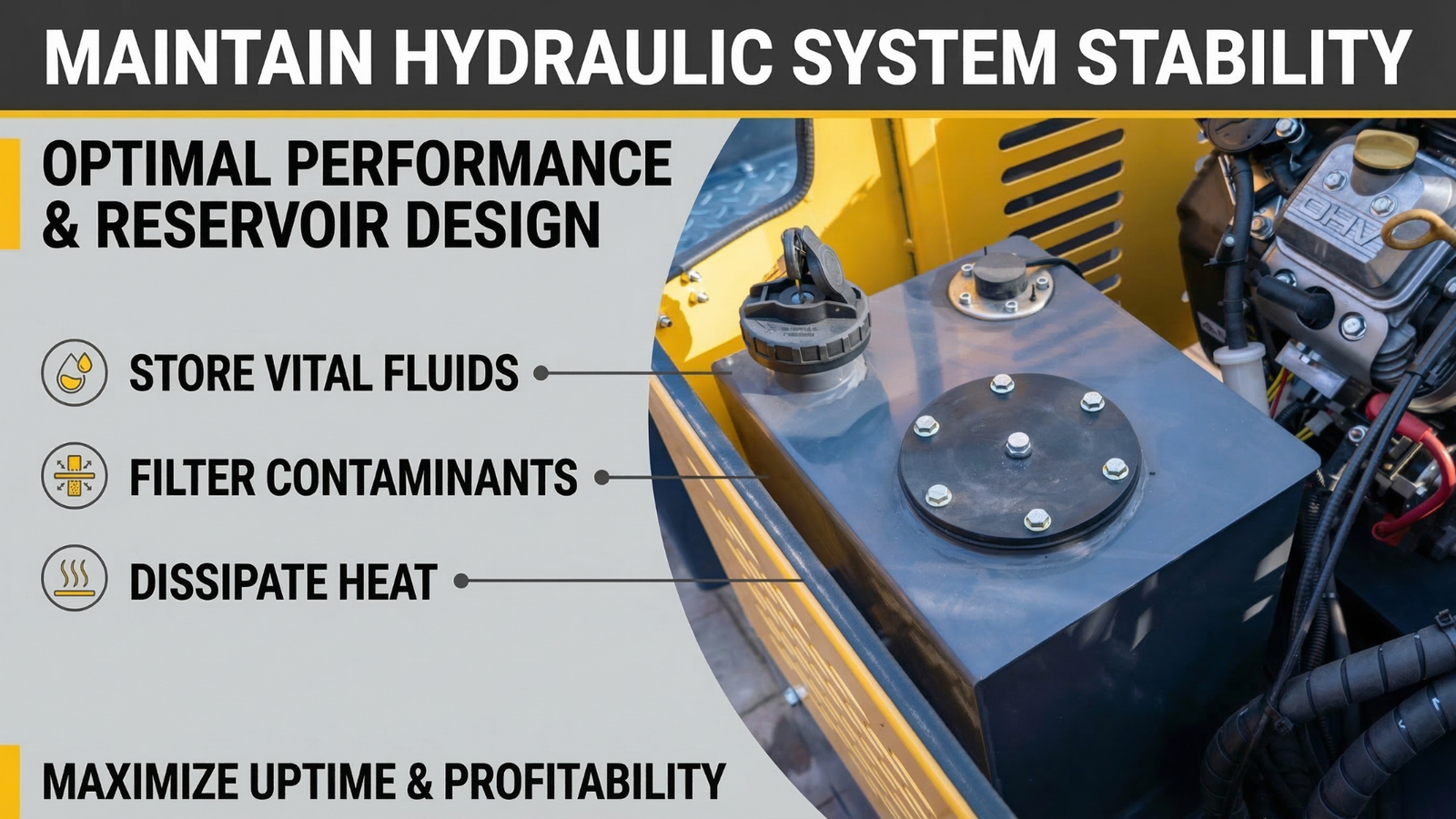
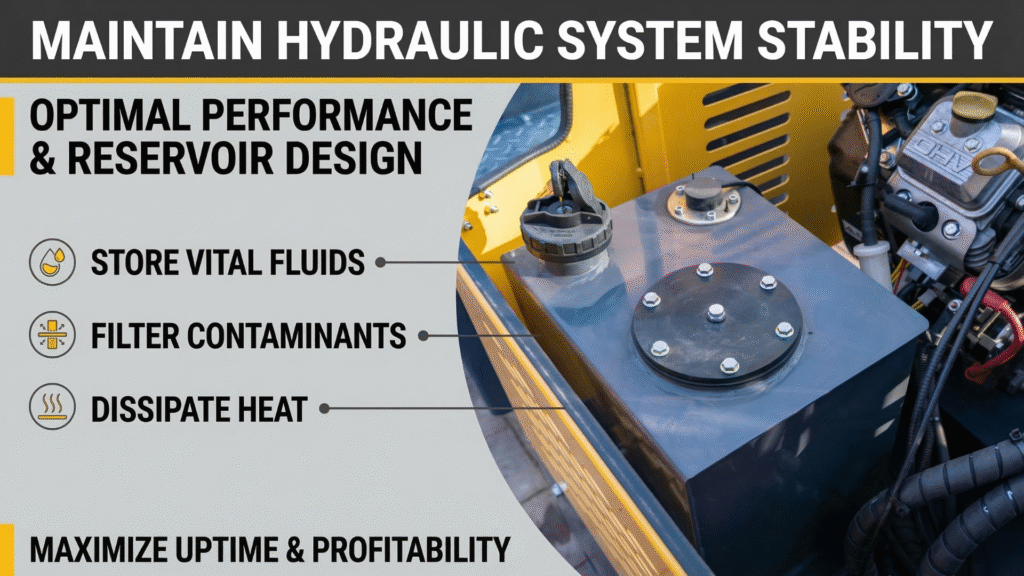
This comprehensive guide explores the essential functions of hydraulic tanks in modern heavy equipment. We will examine how these components store vital fluids, filter out destructive contaminants, and dissipate damaging heat. You will also learn how advanced hydraulic reservoir features contribute to overall system stability at every job site.
The Core Function of Hydraulic Reservoirs
The primary role of a hydraulic tank is to store the hydraulic fluid that powers the machine. However, the amount of fluid inside the system constantly changes during operation. When large hydraulic cylinders extend to lift heavy loads, they draw fluid from the reservoir. As the cylinders retract, that same fluid returns to the tank, often at high speed.
Because of this continuous movement, the reservoir must be large enough to handle these fluctuations without running dry or overflowing. If the tank is too small, the hydraulic pump may begin pulling in air instead of oil when the cylinders are fully extended. This can introduce air bubbles into the system, causing unstable machine movements and potentially damaging the pump.
Hydraulic fluid also expands as it heats up during demanding work cycles. A properly designed reservoir allows space for this expansion, preventing excess pressure that could damage the tank. For this reason, engineers carefully calculate the tank’s capacity based on the machine’s pump flow rate and overall hydraulic system requirements.
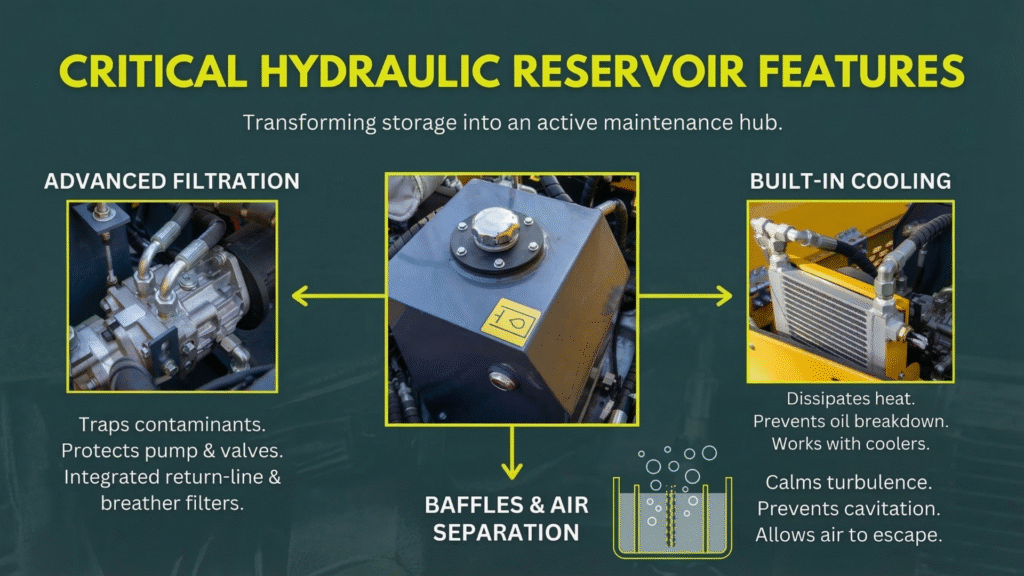
Critical Hydraulic Reservoir Features
Modern heavy equipment utilizes sophisticated hydraulic reservoir features to protect the integrity of the fluid power system. These features transform a simple storage container into an active maintenance hub. By conditioning the oil before it re-enters the high-pressure circuit, the reservoir ensures long-term reliability.
Advanced Filtration Systems
Contamination is the absolute worst enemy of any hydraulic system. Microscopic particles of dirt, metal shavings, and degraded seal material can destroy tight-tolerance valves and pumps in a matter of hours. The hydraulic tank serves as the primary line of defense against these destructive invaders.
Most high-quality reservoirs feature integrated return-line filters. As the used oil flows back into the tank from the working cylinders, it passes through these dense, high-efficiency filtration media. This process traps the dangerous particles before they can circulate back into the main pump.
Additionally, tanks feature specialized breather caps with built-in air filters. As the fluid level inside the tank drops, the reservoir must draw in outside air to prevent a vacuum from forming. The breather filter ensures that this incoming air is completely free of job site dust and moisture, keeping the internal environment pristine.
Built-In Cooling Capabilities
Hydraulic systems generate immense amounts of thermal energy through fluid friction. When pressurized oil flows through narrow valves and heavy-duty cylinders, its temperature skyrockets. If this heat is not managed properly, the hydraulic oil will break down chemically, losing its critical lubricating properties.
The hydraulic tank acts as a massive heat sink for the entire fluid power circuit. The large metal walls of the reservoir absorb the heat from the returning oil and radiate it outward into the ambient air. This passive cooling effect is a fundamental aspect of intelligent hydraulic tank design.
In heavy-duty applications, the reservoir works in tandem with dedicated hydraulic oil coolers. The tank provides a calm settling area where the fluid can rest momentarily, allowing excess heat to dissipate before the oil is drawn back into the active circuit. This thermal management keeps your machine running strong during long, grueling shifts.
Baffles and Air Separation
When high-velocity fluid returns to the reservoir, it creates significant turbulence. This violent splashing can trap tiny air bubbles within the hydraulic oil. If the main pump ingests these air bubbles, they will violently collapse under high pressure, a destructive phenomenon known as cavitation.
To prevent cavitation, engineers install strategic metal plates called baffles inside the hydraulic tank. These baffles force the returning oil to take a long, winding path before it can reach the pump intake line. This extended journey gives the turbulent oil time to calm down and settle.
More importantly, the baffles give the trapped air bubbles enough time to rise to the surface and escape into the air space above the fluid. By separating the air from the oil, the reservoir ensures that the pump only receives a solid, continuous column of pure hydraulic fluid. This careful fluid management directly translates to smooth, predictable machine control.
Ensuring Hydraulic System Stability

Hydraulic system stability is the ultimate goal of effective reservoir design. Stability means your excavator or wheel loader responds with the exact same power and precision at the end of a long workday as it did when you first turned the key. The tank makes this consistency possible by constantly providing the pump with clean, cool, and air-free fluid.
When a reservoir fails to condition the oil properly, the operator immediately feels the negative consequences in the cab. The machine may become sluggish, the cylinders might shudder under heavy loads, and the joysticks will feel unresponsive. These performance issues waste valuable time, increase fuel consumption, and create dangerous handling characteristics.
By prioritizing robust reservoir engineering, manufacturers eliminate these frustrating inconsistencies. A stable hydraulic circuit allows operators to perform delicate grading tasks and heavy lifting operations with absolute confidence. The tank quietly maintains the perfect conditions required for maximum hydraulic efficiency.
The Approach to Hydraulic Tank Design
Superior hydraulic tank design in heavy equipment is essential for long-term reliability and performance. The dependability of a machine is closely tied to the effectiveness of its hydraulic system. High-quality hydraulic tanks are built with robust materials to withstand vibrations and physical impacts typical of demanding job sites. Strategic placement of the reservoir not only enhances passive cooling airflow but also helps maintain a low center of gravity for greater stability and heat management.
Effective hydraulic reservoirs integrate advanced filtration systems and internal baffling, actively protecting the system from contaminants and ensuring stable operation. Properly engineered tanks help maximize hydraulic system stability, enabling equipment to perform consistently and meet the rigorous demands of various applications.
Our engineers construct our reservoirs from heavy-gauge steel, ensuring they can withstand the intense vibrations and physical impacts common on active job sites. We strategically position our tanks to maximize passive cooling airflow while maintaining a low center of gravity for the machine. This careful placement enhances overall equipment stability while keeping fluid temperatures firmly in check.
We equip our machines with industry-leading filtration systems and highly optimized internal baffling. When you operate a Typhon machine, you benefit from a hydraulic reservoir that actively protects your investment. We build our equipment to deliver unwavering hydraulic system stability, empowering your crew to tackle the toughest projects without hesitation.
Proper Maintenance for Optimal Performance
Even the most advanced hydraulic reservoir requires proactive maintenance to function correctly. As an equipment owner, you must establish a strict maintenance routine to protect your hydraulic circuit. Neglecting the reservoir is the fastest way to trigger catastrophic hydraulic failures and incur massive repair bills.
Always monitor the fluid level using the sight glass mounted on the side of the tank. The oil must sit between the minimum and maximum indicator lines while the machine is parked on level ground with the cylinders fully retracted. Operating a machine with low hydraulic fluid guarantees severe pump damage and dangerous overheating.
You must also replace the return filters and the breather caps according to the manufacturer’s recommended service intervals. A clogged return filter will force the fluid to bypass the filtration media, sending contaminated oil directly into the pump. By keeping your filters fresh and your fluid levels accurate, you ensure that your reservoir continues to protect your machine for years to come.
Conclusion
The hydraulic tank is a masterpiece of functional engineering that quietly dictates the performance of your heavy machinery. From storing vital fluids and filtering out destructive contaminants to dissipating intense heat, proper hydraulic tank design is essential for job site success. By understanding these critical hydraulic reservoir features, you can better appreciate the complex machinery that drives your business forward.
Commit to a rigorous maintenance schedule to ensure your equipment maintains perfect hydraulic system stability. Check your fluid levels daily, replace your filters on time, and always use the specific grade of hydraulic oil recommended by the manufacturer. Proactive care guarantees that your hydraulic system will deliver the smooth, powerful performance you expect.
Evaluate your current fleet and consider the engineering quality of your hydraulic systems. Choosing equipment with well-designed hydraulic tanks and reservoirs enhances reliability, efficiency, and safety across all operations. Ensuring your machines are equipped with advanced reservoir features and maintained to high standards helps maximize productivity and supports long-term operational success.