Free Shipping Within USA | 1-year Warranty
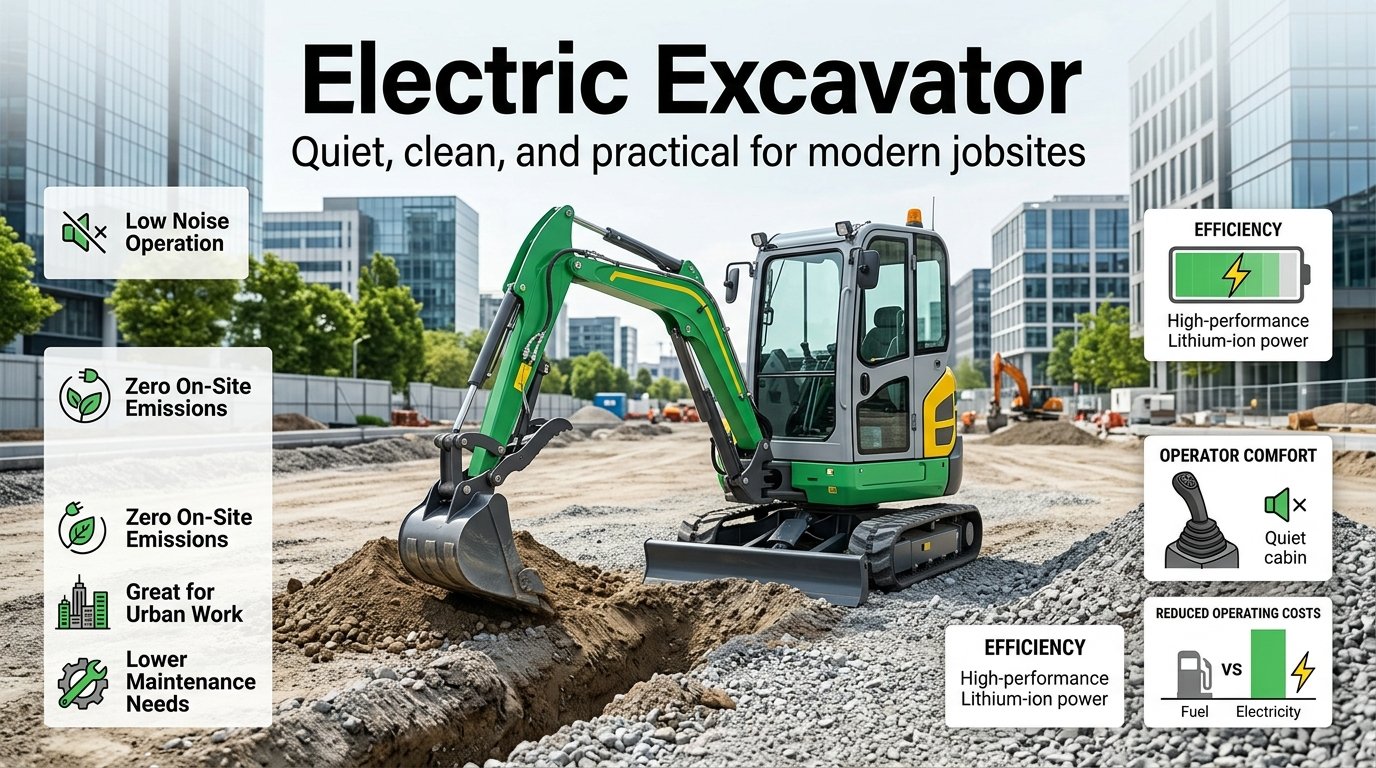
Electric Excavator Guide: What Buyers and Operators Should Know
An electric excavator is becoming a real option for contractors, rental companies, farms, landscaping crews, and businesses that want cleaner and quieter equipment. It does the same basic work as a diesel excavator, but it uses an electric motor and battery system instead of a fuel engine.
For many buyers, the main question is simple: is an electric excavator practical, or is it only good for special jobs? The answer depends on the jobsite, working hours, charging access, machine size, and budget. This guide explains the basics in clear terms so buyers and operators can understand where electric excavators make sense.
What Is an Electric Excavator?
An electric excavator is an excavating machine powered by electricity instead of diesel fuel. It still uses hydraulic systems to move the boom, arm, bucket, blade, and attachments. The big difference is the power source.
A diesel excavator uses an engine, fuel tank, exhaust system, filters, and engine oil. An electric excavator uses a battery pack, electric motor, controller, charger, and related electrical parts. Some models are fully battery-powered, while some can also work while connected to a cable.
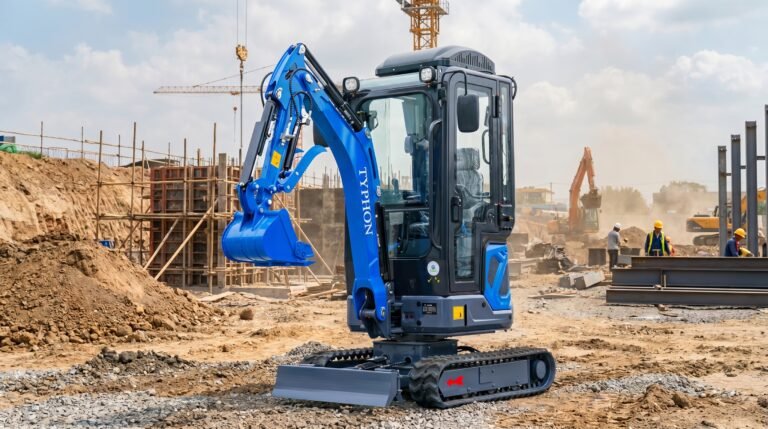
Electric excavators are available in different sizes, but they are most common in compact and mini excavator classes. Smaller machines are easier to electrify because they need less battery capacity and are often used in areas where low noise and low exhaust matter more.
How an Electric Excavator Works
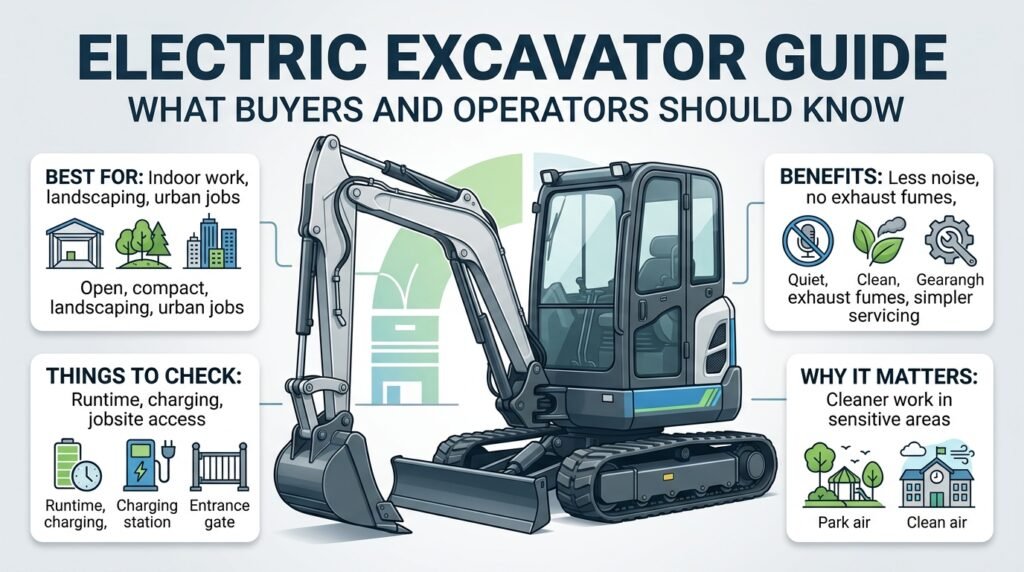
The basic work process is still familiar. The operator uses the controls to move the machine, dig soil, lift material, grade land, or use attachments. The machine still relies on hydraulic power for digging force and smooth movement.
The electric system supplies power to the hydraulic pump and travel motors. Instead of burning fuel, the battery sends energy to the motor. When the battery gets low, the machine needs to be charged from a power source.
For the operator, the controls may feel similar to a diesel excavator. The biggest differences are usually the lower noise, smoother startup, no diesel smell, and less vibration. The machine may also feel more responsive in stop-and-go work because electric motors can deliver power quickly.
Where Electric Excavators Are Most Useful
An electric excavator is not the best answer for every job, but it can be very useful in the right setting.
It works well for indoor demolition, basement work, tunnel work, warehouse renovation, landscaping, urban construction, utility work, and jobs near homes, schools, hospitals, or offices. These areas often need cleaner and quieter equipment.
For example, a small electric excavator can work inside a building where diesel exhaust would be a problem. It can also help crews work in residential areas with less noise, especially during early morning or restricted-hour jobs.
Electric excavators are also useful for companies that work on projects with emission limits. Some cities and public projects are starting to ask for cleaner machines, so electric equipment can help meet those job requirements.
Main Benefits of an Electric Excavator
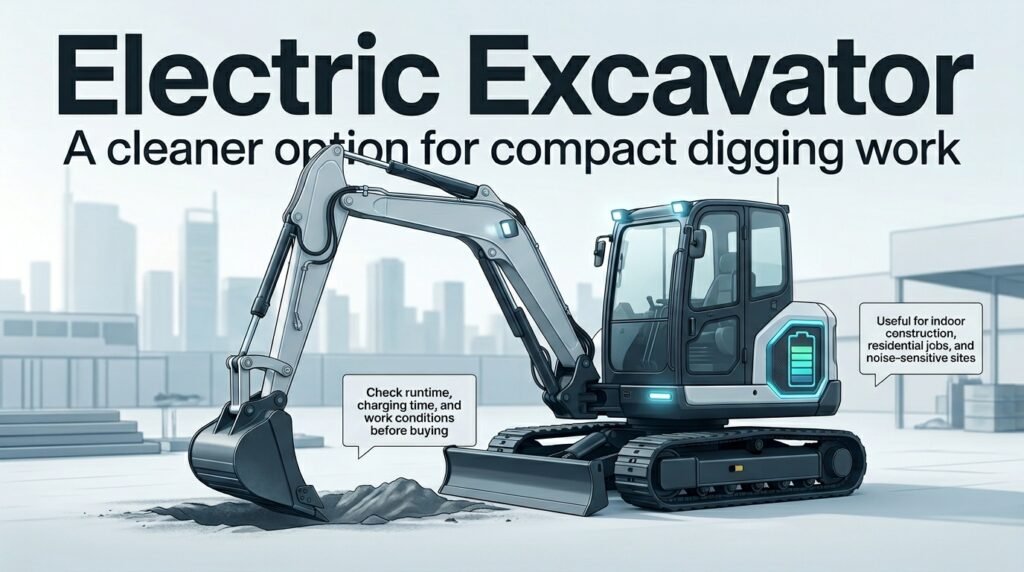
The biggest benefit of an electric excavator is that it produces no exhaust at the jobsite. This is useful in enclosed spaces and crowded areas where air quality matters. Operators and nearby workers do not have to deal with diesel fumes from the machine.
Another benefit is lower noise. Electric machines are usually much quieter than diesel machines because there is no engine running all day. This can make the jobsite more comfortable and reduce complaints from nearby residents or businesses.
Maintenance can also be simpler. Since there is no diesel engine, there is no engine oil change, no fuel filter, no diesel exhaust fluid system, and no exhaust aftertreatment service. The machine still needs normal checks, grease, hydraulic maintenance, track care, and battery system inspection, but the engine-related service is reduced.
Electric excavators may also lower daily energy cost, depending on local electricity prices and diesel prices. The real savings depend on how often the machine is used, how it is charged, and how long the battery lasts over the ownership period.
Limits to Consider Before Buying
An electric excavator has clear advantages, but buyers should understand the limits before making a decision.
The first limit is runtime. A diesel excavator can keep working as long as fuel is available. An electric excavator depends on battery capacity and charging time. Light work may last longer, while heavy digging, constant travel, and attachment use can drain the battery faster.
The second limit is charging access. If the jobsite has reliable power, charging is easier. If the machine works in remote areas, the owner may need a generator, mobile charger, spare charging plan, or longer downtime between shifts.
The third limit is purchase price. Electric machines often cost more upfront than diesel machines. The buyer needs to compare the full cost, not just the machine price. Fuel savings, maintenance savings, charging cost, work requirements, and resale value should all be considered.
Another point is availability. Diesel excavators are easier to find in many sizes and price ranges. Electric excavators are still more limited, especially for larger digging jobs and heavy-duty earthmoving.
Charging, Runtime, and Jobsite Planning
Charging is one of the most important parts of owning an electric excavator. Before buying one, the owner should know where the machine will charge, how long charging takes, and whether the job schedule allows enough charging time.
Some machines can charge overnight and work the next day. Some can use faster charging systems. Some jobs may need a midday charge if the machine is used heavily. The exact runtime depends on machine size, battery capacity, digging load, weather, attachment use, and operator habits.
A good jobsite plan should answer a few basic questions:
Can the machine work a full shift on the expected tasks?
Is there enough power on site?
Can the machine charge during breaks or overnight?
Will the crew need backup equipment?
Is the charging cable or charger protected from damage?
For a business owner, charging should be treated like fuel planning. If it is planned well, the machine can fit smoothly into daily work. If it is ignored, the machine may sit idle when it is needed most.
What to Check Before Choosing an Electric Excavator
Before buying an electric excavator, start with the job type. A machine used for light trenching, landscaping, indoor work, or small utility jobs has different needs from a machine used for heavy digging all day.
Check the operating weight, digging depth, bucket force, lifting capacity, track width, and attachment compatibility. These basic specs still matter. Do not choose a machine only because it is electric. It still needs to match the work.
Next, check the battery and charging details. Ask about expected runtime in real job conditions, not only ideal conditions. Ask how long charging takes with normal power and faster charging options. Also ask what charger is included and what power supply is required.
Maintenance support is also important. Electric machines need technicians who understand battery systems, controllers, wiring, and safety procedures. Before buying, check whether parts, service, and support are available in your area.
Finally, think about total cost. The right machine may cost more at first but save money through lower fuel use and simpler maintenance. However, if charging is difficult or the machine cannot complete the workday, the savings may not matter.
Conclusion
An electric excavator can be a smart choice for clean, quiet, and controlled jobsites. It is especially useful for indoor work, urban projects, landscaping, and areas with noise or emission limits.
Still, it is not a perfect replacement for every diesel excavator. Buyers should look closely at runtime, charging access, job type, service support, and total cost before choosing one. The best electric excavator is not simply the newest model. It is the machine that fits the work without slowing the job down.