Free Shipping Within USA | 1-year Warranty
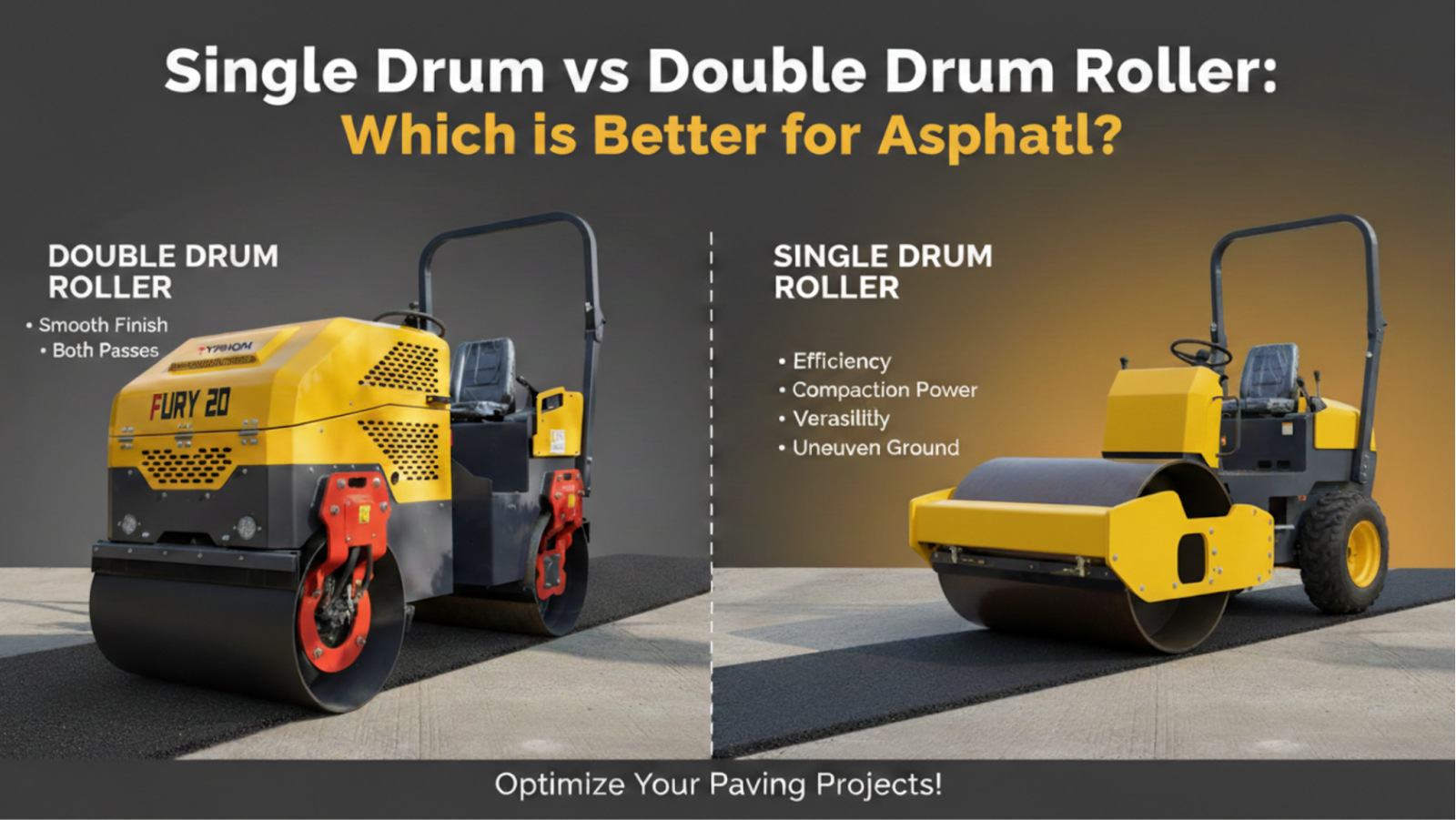
Single Drum vs Double Drum Roller: Which is Better for Asphalt?
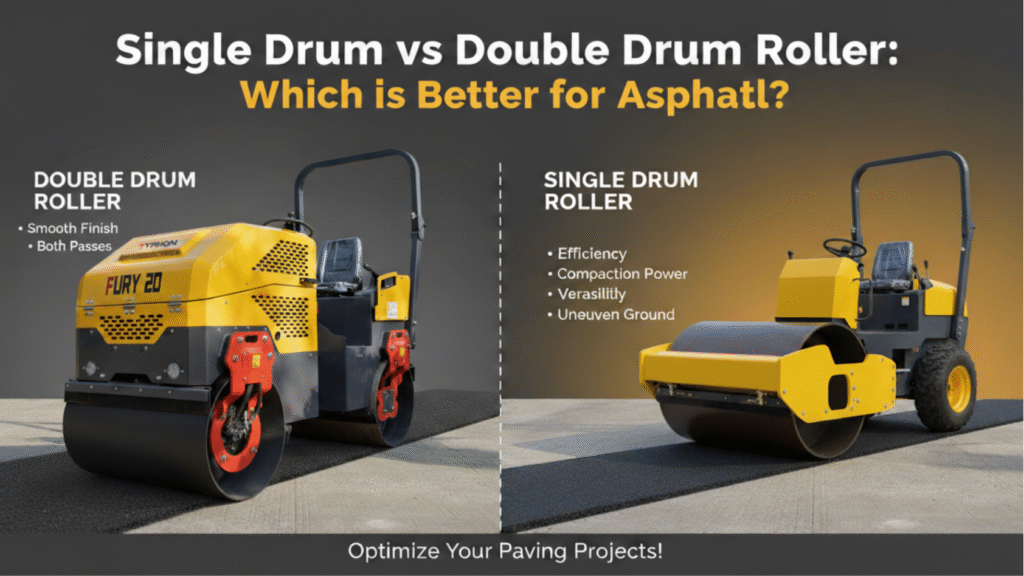
Choosing the right compaction equipment is a critical step in any paving project. The quality of your compaction directly determines the durability, longevity, and performance of the final asphalt surface. Two of the most common machines for this task are the single drum roller and the double drum roller. While both are designed for compaction, they serve very different purposes and are suited for distinct phases of a project.
Understanding the specific strengths of each machine is essential for achieving optimal results and ensuring a reliable, long-lasting pavement. This guide will provide a clear comparison between a single drum road roller and a double drum vibratory roller, helping you make an informed decision for your asphalt projects. We will analyze their applications, performance characteristics, and the specific jobs where each machine excels.
The Role of a Single Drum Road Roller
A single drum road roller, often called a padfoot or soil compactor, is a heavy-duty machine designed for the initial stages of road construction. It features one large, heavy steel drum at the front and conventional tires at the rear for traction and propulsion. These rollers are the workhorses of sub-base preparation, built to handle granular materials like soil, gravel, and crushed aggregate.
Application: Building the Foundation
A single drum roller is primarily used to compact subgrade and base layers before asphalt is applied. A stable, dense foundation is essential for any road or structural project, and this machine delivers the necessary compaction through its heavy drum and strong vibratory force. Removing air pockets and increasing soil density, it improves load-bearing capacity and overall ground stability. The rear tires help maintain traction and allow the roller to move efficiently over semi-cohesive soils and uneven terrain.
However, a single drum road roller should not be used on fresh asphalt. Its powerful vibration and tire pressure can damage hot mix asphalt, causing surface marks and structural weakness. Its purpose is strictly foundational — creating a solid base that supports the final asphalt layers. For long-lasting results, proper ground compaction is critical, and this is where the single drum roller plays a vital role.
Performance and Key Features
The power of a single drum roller comes from its high-amplitude, low-frequency vibration. This type of force allows the compaction energy to penetrate deep into the soil and granular layers, ensuring density targets are met throughout the entire lift. Some models come with a smooth drum, while others feature a “padfoot” drum with multiple steel pads. Padfoot drums are designed to knead and compact clay-based soils more effectively by concentrating pressure into smaller points.
The Expertise of a Double Drum Vibratory Roller
A double drum vibratory roller, also known as a tandem roller, is the finishing expert in asphalt paving. This machine features two steel drums, one at the front and one at the rear, both of which can vibrate to compact material. Its design is specifically engineered to work on hot mix asphalt, creating a smooth, dense, and uniform surface that is ready for traffic.
Application: Finishing the Asphalt Surface
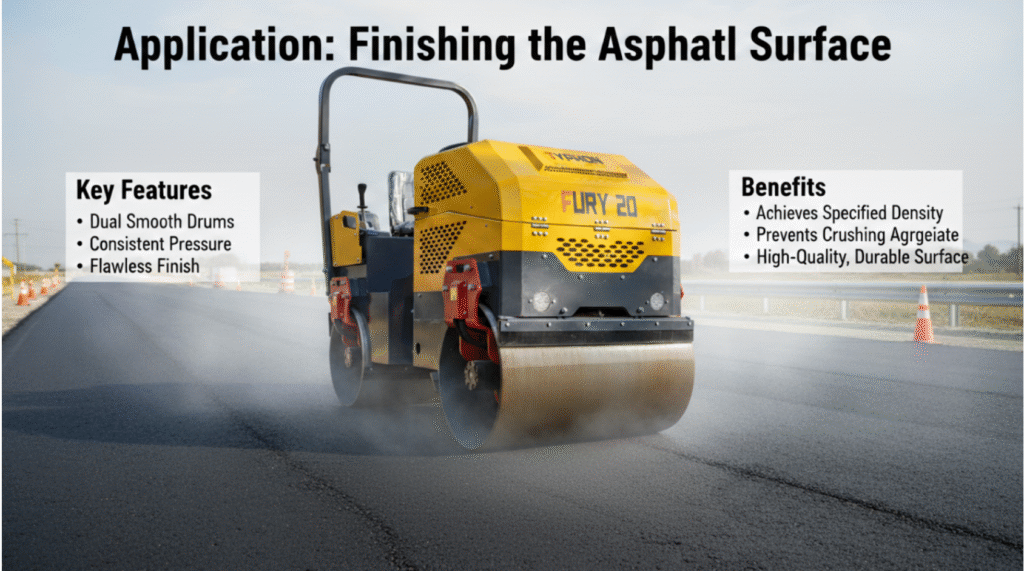
Once the sub-base is prepared and the asphalt paver has laid down a fresh mat, the double drum vibratory roller takes over. Its job is to perform the breakdown, intermediate, and finishing rolling passes. The goal is to achieve the specified density of the asphalt mix without crushing the aggregate or causing surface defects. The dual smooth drums provide a consistent, even pressure across the entire width of the machine, which is crucial for achieving a flawless finish.
These rollers are not suitable for compacting soil or sub-base layers. Their design lacks the traction of a tire-driven machine, making them prone to getting stuck on loose or uneven granular materials. Their expertise is exclusively in creating a high-quality, durable asphalt surface. For any project involving driveways, parking lots, or roadways, a double drum roller is an indispensable tool.
Performance and Key Features
Unlike a single drum model, a double drum vibratory roller uses high-frequency, low-amplitude vibration to compact asphalt without damaging the aggregate structure. This controlled vibration allows for efficient density gain while maintaining the integrity of the hot mix. Operators can adjust each drum independently — activating both drums during the initial breakdown pass for faster compaction, then switching to static mode for the final pass to achieve a smooth, even finish.
Modern tandem rollers are also equipped with practical features such as water spray systems to prevent asphalt from sticking to the drums and offset drum designs for compacting near curbs and edges with precision. This combination of control, efficiency, and surface quality makes the double drum vibratory roller the preferred choice for asphalt finishing and paving projects.
Head-to-Head Comparison
When comparing these machines, several features and application differences stand out:
- Primary Use: A single drum road roller is ideal for compacting soil, sub-base, and aggregate layers. This makes it the best choice for foundational work before any asphalt is placed. On the other hand, a double drum vibratory roller specializes in compacting hot mix asphalt (HMA) to achieve smooth, durable surfaces.
- Drums: The single drum roller is equipped with one steel drum at the front and tires at the rear, which enhances traction on loose or uneven surfaces. In contrast, the double drum roller has two steel drums—one at the front and one at the rear—specifically designed to produce even pressure across new asphalt mats.
- Vibration: Single drum road rollers deliver high-amplitude, low-frequency vibration to penetrate deep into the underlying layers. Double drum vibratory rollers generate low-amplitude, high-frequency vibrations, perfect for surface compaction without damaging the aggregate in asphalt.
- Best For: Single drum rollers are best for building a strong, stable foundation, especially on projects that require deep compaction and high load-bearing capacity. Double drum rollers excel at finishing the top asphalt layer, ensuring a smooth, dense, and uniform surface.
- Traction: With their tire-and-drum configuration, single drum rollers provide excellent traction on granular and uneven terrain. Double drum rollers, designed for flat surfaces, may struggle on loose soil but deliver impeccable results on paved asphalt.
- Application Stage: Use a single drum road roller during the initial site preparation and sub-base work. Reserve the double drum vibratory roller for the final breakdown, intermediate, and finish rolling phases to achieve professional-grade paving results.
Conclusion: The Right Roller for the Right Job
The question is not whether a single drum or double drum roller is “better,” but which one is correct for the specific task at hand. They are not interchangeable; they are two specialized pieces of equipment designed for different stages of the road construction process.
Choose a single drum road roller for:
- Compacting sub-base layers of soil, gravel, and other granular materials.
- Projects requiring deep compaction and high load-bearing capacity.
- Working on uneven terrain where traction is essential.
Choose a double drum vibratory roller for:
- All phases of hot mix asphalt compaction.
- Creating a smooth, uniform, and durable finished pavement.
- Projects where surface quality and finish are the top priority.
For a successful paving project, you need both a solid foundation and a flawless surface. This often means utilizing a single drum road roller to prepare the ground and a double drum vibratory roller to finish the asphalt. Investing in the correct machine for each application ensures efficiency, quality, and long-term durability. Our commitment is to provide the reliable equipment you need to deliver exceptional results on every job.
Meta Information
Meta Title: Single Drum vs. Double Drum Roller: Which to Use for Asphalt?
Meta Description: Confused about asphalt rollers? Compare the single drum road roller and double drum vibratory roller to see which is best for your paving project.